
Gutter Cleaning in Ahuimanu, HI
Gutter Cleaning for Ahuimanu Homes
Ahuimanu is small enough to feel like one place and is really three, and the difference is when each part was built. The core Ahuimanu Area is the oldest housing stock. Ahuimanu Hills, west of the Valley of the Temples Memorial Park, went up through the 1980s. Ahuimanu Knolls followed in the 1990s. Those three eras carry three different fascia details, three different original gutter specifications, and three different states of wear on the fasteners, which is why a single maintenance recommendation for the community as a whole is not much use. The other governing fact here is elevation. The Koolau Mountains rise sharply immediately to the west, and that wall is what wrings rain out of the trade winds before the rest of the island sees it. Rooflines in this valley take on serious water volume on days when Kaneohe Town gets a passing shower. A drop count that would be adequate a few miles away backs up here.
Three Build Eras in One Small Community
The setting is the reason people live here and also the reason the gutters work harder. Byodo-In Temple sits at the foot of the range inside Valley of the Temples Memorial Park, dedicated in 1968, and the same cliffs that make that view are what deliver the rainfall onto the housing below. Homes on the sloped sections through Ahuimanu Hills and the Knolls have a second problem that flat-lot properties do not: where discharge lands matters as much as whether the run is clear, since water leaving a spout onto ground already falling toward the house has simply been relocated. Coming off Kahekili Highway into Temple Valley, that is the fault we correct most often.

Gutter Repair in Ahuimanu
A clear-out here has to account for water volume as well as debris volume, and that is not the usual emphasis. Because the Koolau Mountains rise directly behind the housing, rainfall arrives harder and more often than a few miles down the coast, so a partially blocked run reaches overflow much sooner than the same run would elsewhere. We clear the full length by hand, flow-test every drop, and pay particular attention to whether the existing outlet count can actually carry what this valley delivers. On the older housing in the core Ahuimanu Area we often find the original drop specification still in place, sized to an assumption that has not matched the roof's real load for decades, and the same is true on parts of Temple Valley. Rain that heavy also means the interval between visits matters more here than the thoroughness of any single one.
Gutter Guards on Hillside Lots
Repair findings sort neatly by build era, which makes diagnosis quicker here than in most places. In the core Ahuimanu Area the housing is old enough that fastener corrosion and softened fascia are the usual story. Through Ahuimanu Hills, built in the 1980s, we more often find hangers that were adequate when installed and are no longer coping with the accumulated debris weight. In Ahuimanu Knolls, the newest of the three and a decade later again, failures tend to be pitch and seam issues rather than material fatigue. We clear the affected section before judging any of it, because a loaded run tells you nothing reliable about which of those three it is, and quoting a repair off the wrong diagnosis is how people end up paying twice. Knowing the era before we arrive lets us bring the right fasteners rather than making a second trip for them.

Serving Temple Valley and the Ahuimanu Hills
On sloped lots a guard changes the maintenance interval but does nothing at all about discharge, and here that second issue is often the more urgent one. We will fit guards where the canopy justifies them, and on the wooded sections near the Valley of the Temples Memorial Park it frequently does. But on a hillside property through Ahuimanu Hills or the Knolls we would rather first make sure the water leaving each spout is being carried clear of the foundation rather than released onto ground already running toward the house. Guards on a run whose discharge is undermining the uphill side of the property are money spent on the wrong problem, and we will say so before taking the order. Getting the discharge right first also means the guard is protecting a system that actually works.
Gutter work built for the windward side of Oahu.
Proudly serving Kaneohe, Kailua, Kahaluu, Waimanalo, Ahuimanu and Heeia for years.
Comprehensive Gutter Cleaning Services in Kaneohe
Tailored to Your Needs
Ten services, from routine clean-outs to full replacement runs. Most Kaneohe calls start with cleaning and turn up something else once the debris is out, which is why repair, fascia work and guard installation sit alongside it rather than in a separate department.

A full clear-out of troughs and downspouts, followed by a flow test on every drop.
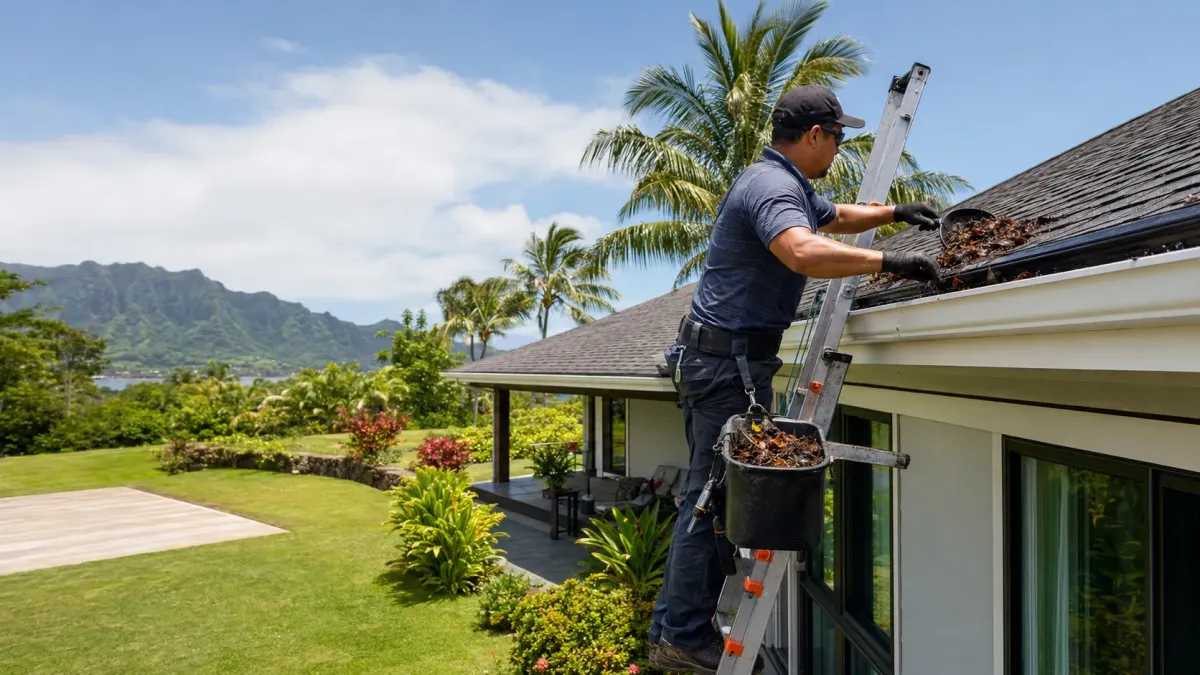
Targeted repair of sagging sections, open seams and fasteners that have pulled loose.
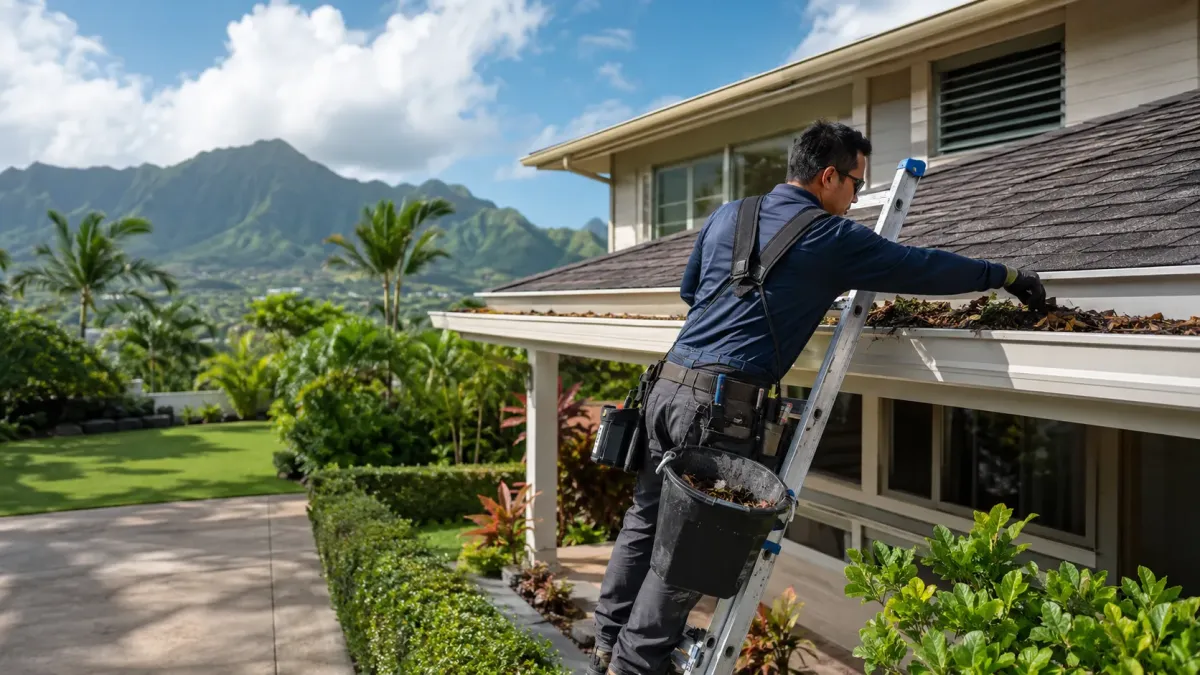
Screens and covers sized to the debris actually falling on your roofline.
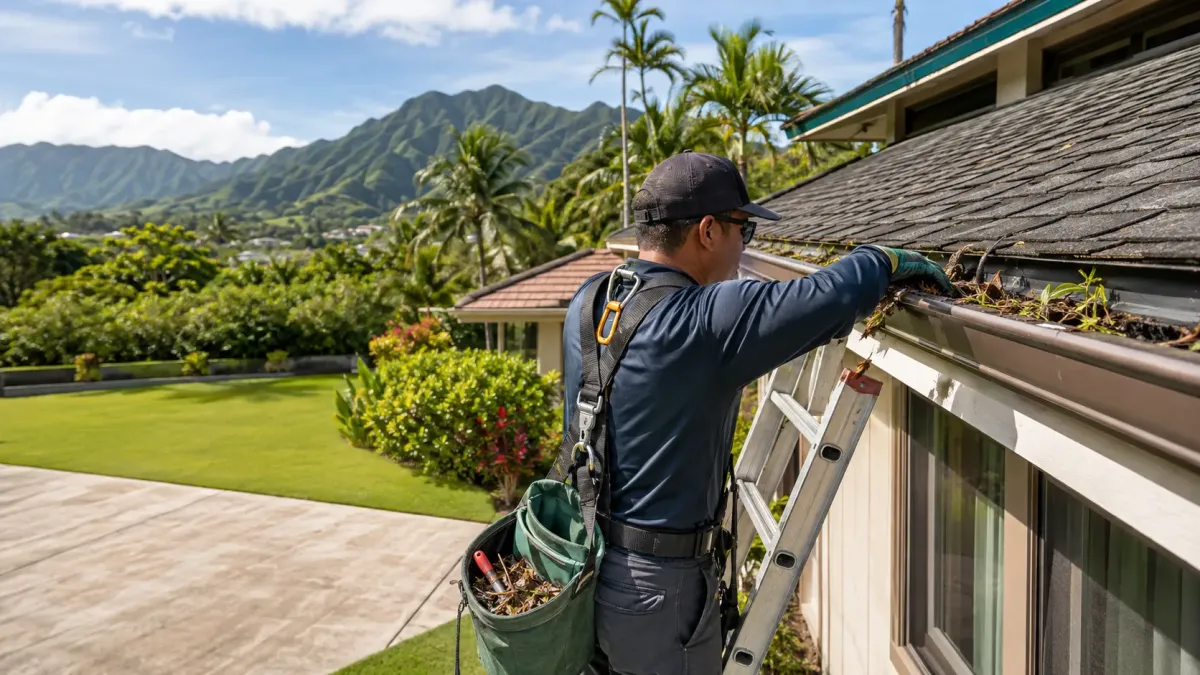
Removal of a failed run and installation of a correctly pitched and sized replacement.
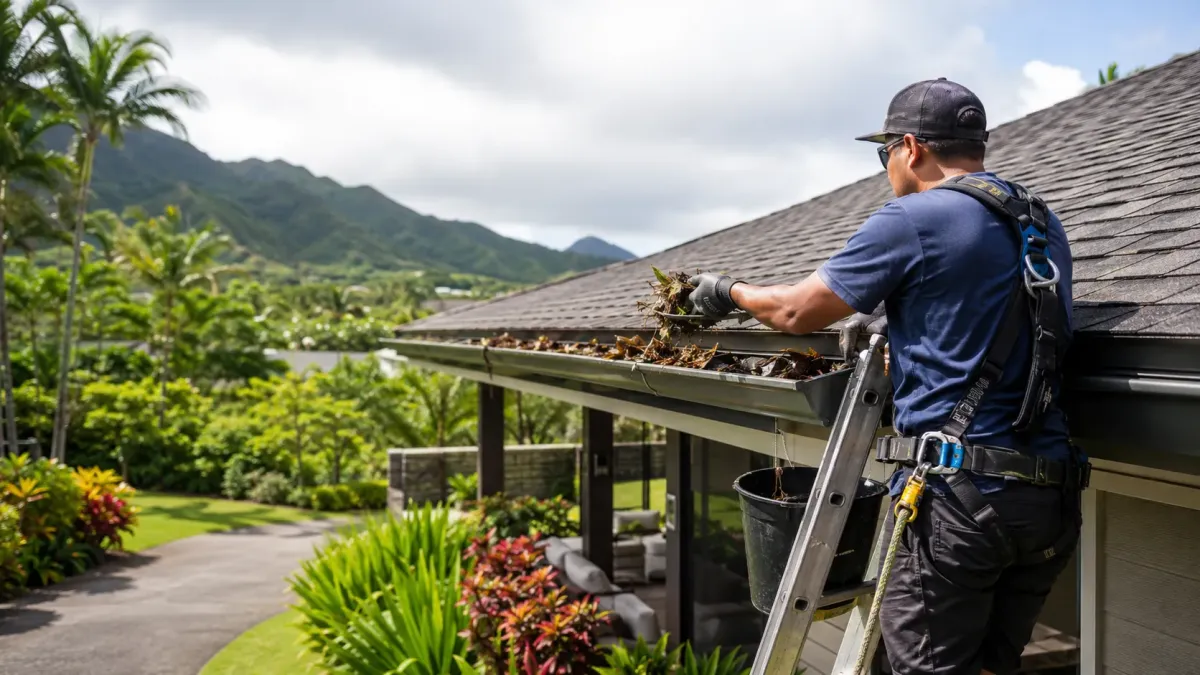
Clearing, repair and correct sizing of the drops that carry the roof's water away.
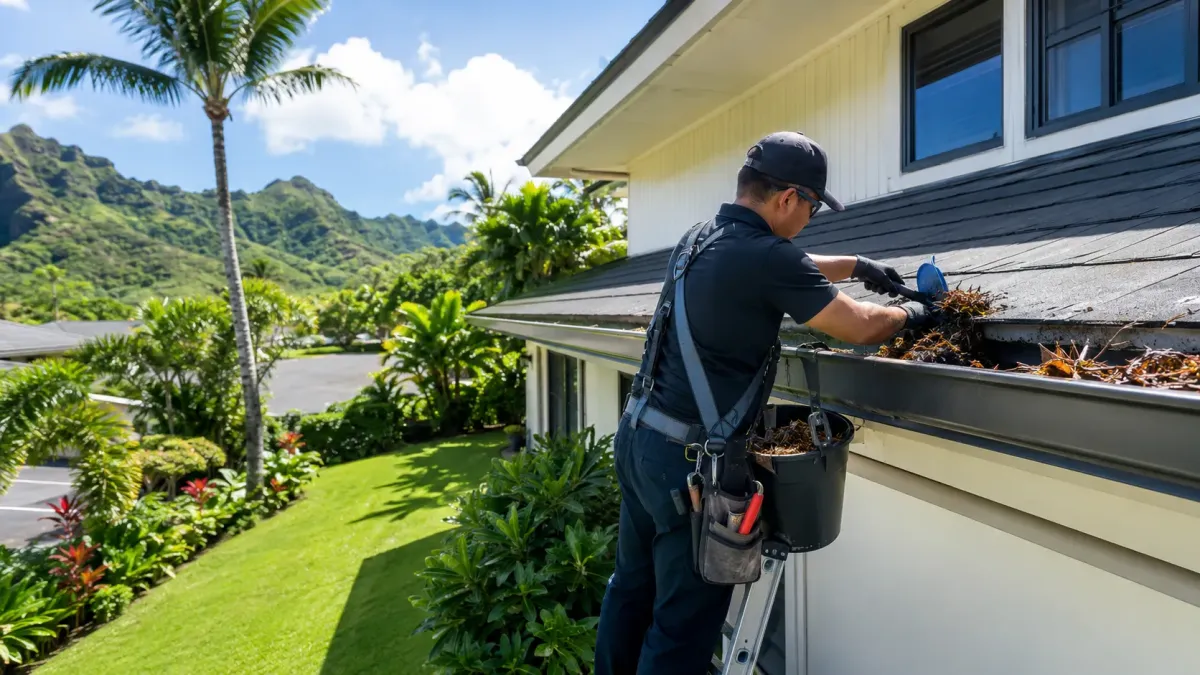
A documented condition check of every run, drop and fascia line on the roof.

Scheduled gutter service for multi-building properties, with documented completion per building.
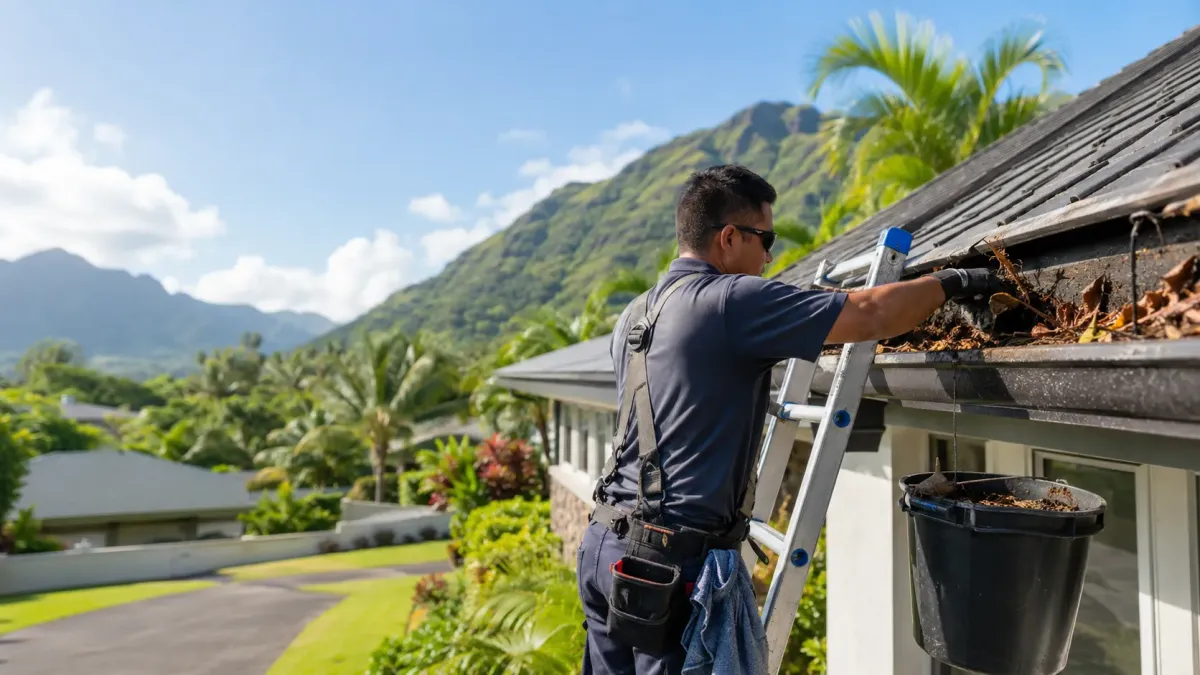
Repair of the fascia and soffit that overflowing gutters have soaked and softened.

Continuous runs formed to length on site, with joints only where the roofline turns.
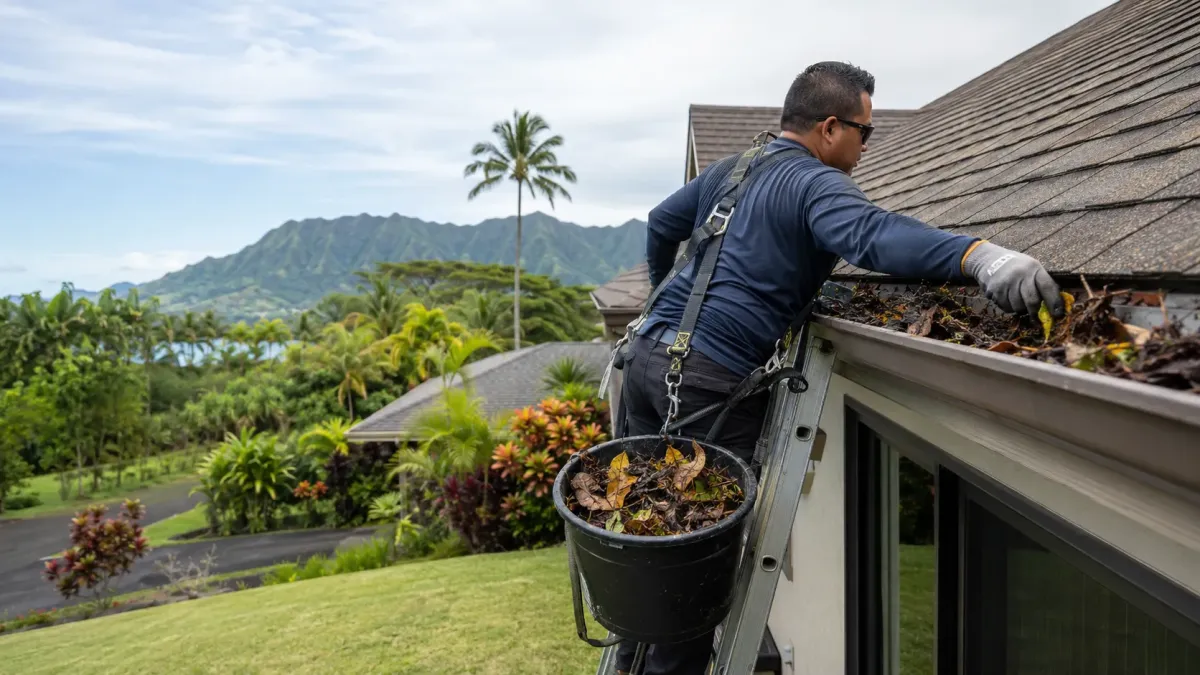
New runs installed where a roofline has none, sized to the water it sheds.
Frequently Asked Questions
Gutter Cleaning can be complex, and we’re here to provide answers to common questions. Here are some frequently asked questions from our clients.
Frequently Asked Questions about gutter cleaning kaneohe hawaii
How often should you clean gutters in Hawaii?
More often than the twice-a-year rule you will read on mainland sites. Nothing overhead here drops its leaves in one go and then stops, so debris arrives in every month of the year. Most Kaneohe homes under real canopy need three to four visits a year, and homes with an open roofline and little tree cover can often hold at two.
Why do gutters clog so fast in Kaneohe?
Two things stack up. The canopy is evergreen and constantly shedding seed pods, flower drop and fronds, and the Koolau Mountains pull rain down onto Kaneohe rooflines on days when the leeward side stays dry. Debris keeps arriving and rain keeps packing it tighter into the low end of the run.
What is the best month to get your gutters cleaned?
October is the month that matters most here, because it puts the system clear before the wet stretch that runs through winter. A second visit around March clears whatever the storms drove in. If you only ever book once, book it before winter rather than after.
How much should you expect to pay for gutter cleaning?
There is no single number, and any figure quoted before someone has seen the roof is a starting point rather than a price. Cost follows the length of the run, how many stories, roof pitch and access, whether the downspouts are packed or just the troughs, and what is overhead. We price after looking at the roofline.
Do I need gutter guards in Hawaii?
Guards help most on homes under heavy canopy, where they cut the number of full clean-outs a year. They do not eliminate service, and on the windward side that matters more than usual, because fine organic grit still washes through the mesh and settles in the run. Think of a guard as reducing visits, not ending them.
What causes black streaks on gutters?
That staining is usually a mix of asphalt shingle runoff and the mildew that grows readily in this humidity, drawn down the face of the gutter by water spilling over the front edge. It is a sign the trough is overflowing rather than draining. Clearing the run and correcting the pitch usually stops new streaking, and the existing stain can be washed off separately.
Still Have Questions About gutter cleaning kaneohe hawaii?
Speak With a Trusted Gutter Cleaning Expert Today.
What Our Satisfied Clients Have to Say About
We pride ourselves on delivering great results and experiences for each client. Hear directly from home and business owners who’ve trusted us with their Gutter Cleaning needs.
The Trusted Gutter Cleaning Expert Near You
Ready to hear more about expert services at ?
Contact us today to receive a detailed, no-obligation quote.


