
Gutter Cleaning in Kailua, HI
Gutter Cleaning for Kailua Homes
Gutter work in Kailua is shaped by how the town was built. Enchanted Lake is the largest residential neighborhood here, developed in the 1960s around Kaelepulu Pond, and most of those homes went up in single-wall redwood framed construction. That detail matters at the roofline more than anywhere else on the house, because the fascia those gutters are fastened into is thinner and less forgiving than the framing on later construction, and a loaded run that starts to pull has less to hold onto. The second factor is Kawainui Marsh, the largest remaining wetland in the state, which sits right against the residential streets and drives a genuinely different debris profile than an inland roofline sees. Homes on the marsh side of town collect more organic material and more of it arrives already damp. Then there is the third Kailua, the oceanfront stretch through Lanikai and Beachside, where salt exposure rather than debris is what shortens a run's life. Three different problems in one town, and they do not share a maintenance schedule.
Single-Wall Framing and What It Means for Fascia
The neighborhoods sort roughly by what they ask of a gutter. Maunawili sits inland and lush, with the heaviest canopy loads in the town and the shortest intervals between clear-outs. Keolu Hills and Kalaheo Hillside are elevated, so the concern shifts toward where discharge lands once it leaves the spout on a slope. Aikahi Park and Kuulei Tract sit in the older flatter stretch, where the 1960s fascia question dominates. Along Keolu Drive and Wanaao Road we see the same pattern repeatedly: runs cleaned regularly, downspouts never flow-tested, and the overflow quietly working on the board behind the gutter for years. We check the fascia on every visit here rather than treating it as a separate trade.

Gutter Repair in Kailua
Cleaning intervals in Kailua vary more by neighborhood than in most towns, which is why we set them per address rather than per postcode. A house backing onto Kawainui Marsh takes on damp organic material more or less continuously and will not hold a six-month interval no matter how well it was cleared. Inland under the Maunawili canopy the load is heavier still, and homes on the sloped ground through Keolu Hills add runoff to the picture. Out through Lanikai the debris volume drops away and salt becomes the governing issue, so the visit is as much about checking the metal and the fasteners as clearing the trough. Every clean-out includes a flow test on each downspout, because the elbow is where windward debris compacts and where a run that looks spotless from a ladder is still blocked.
Gutter Guards Near the Marsh
Repair work here runs into the framing question sooner than elsewhere. On the 1960s single-wall construction common through Enchanted Lake and the older tracts around Kuulei Tract and Coconut Grove, a gutter that has begun to pull is often telling you about the board behind it rather than about the hanger. We clear the section first, because a sag cannot be judged with the load still in it, then check whether the fascia is sound before refastening anything. Rehanging a run into softened wood buys a season at most. Where the board has gone, we say so and price the carpentry with the gutter work rather than sending you to a second trade and a second mobilisation, which on these older rooflines is how a manageable repair turns into two.

Serving Enchanted Lake, Lanikai and Maunawili
Guards make their strongest case on the marsh side of Kailua and up in Maunawili, where the canopy load is heavy enough that they meaningfully cut the number of full clear-outs a year. They make a much weaker case out toward Lanikai and Beachside, where there is little overhead and the real enemy is salt rather than debris. Fitting covers to a coastal run there adds cost without removing many visits, and it puts another component into an environment that is already hard on metal. We assess what is actually above the roof before recommending a type, and where the existing run is near the end of its life we will tell you to replace first and fit guards afterward rather than the reverse. Where a run is being replaced anyway, fitting the guard at the same time saves a second mobilisation and a second charge.
Comprehensive Gutter Cleaning Services in Kaneohe
Tailored to Your Needs
Ten services, from routine clean-outs to full replacement runs. Most Kaneohe calls start with cleaning and turn up something else once the debris is out, which is why repair, fascia work and guard installation sit alongside it rather than in a separate department.
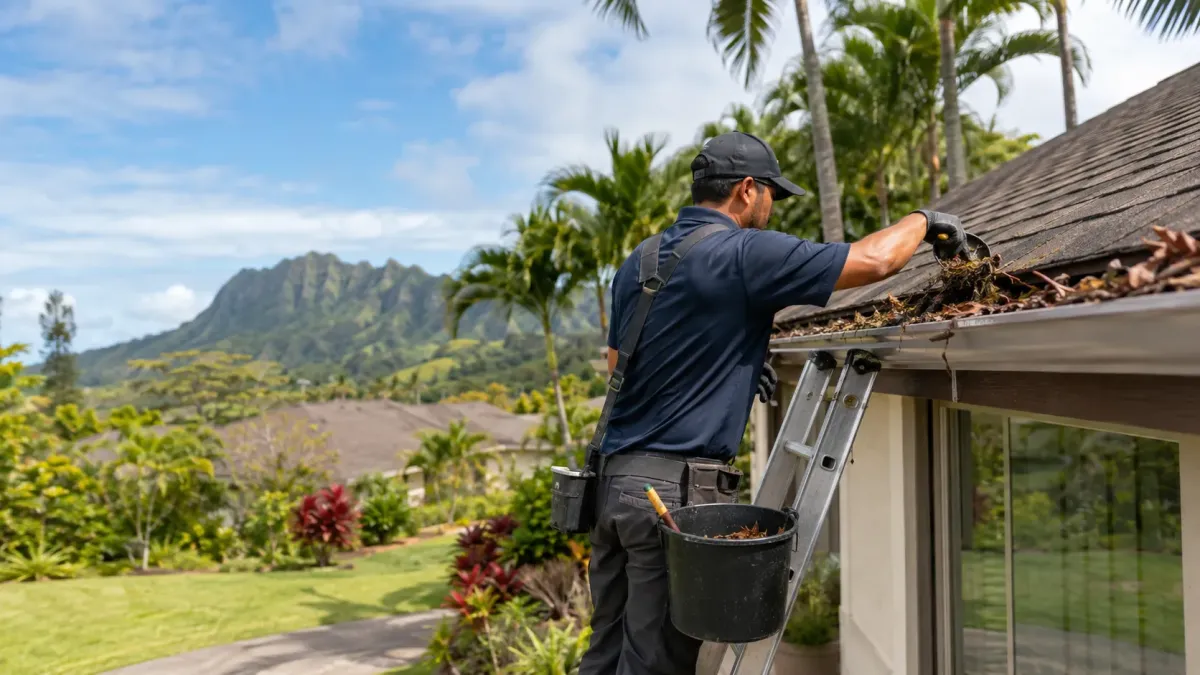
A full clear-out of troughs and downspouts, followed by a flow test on every drop.
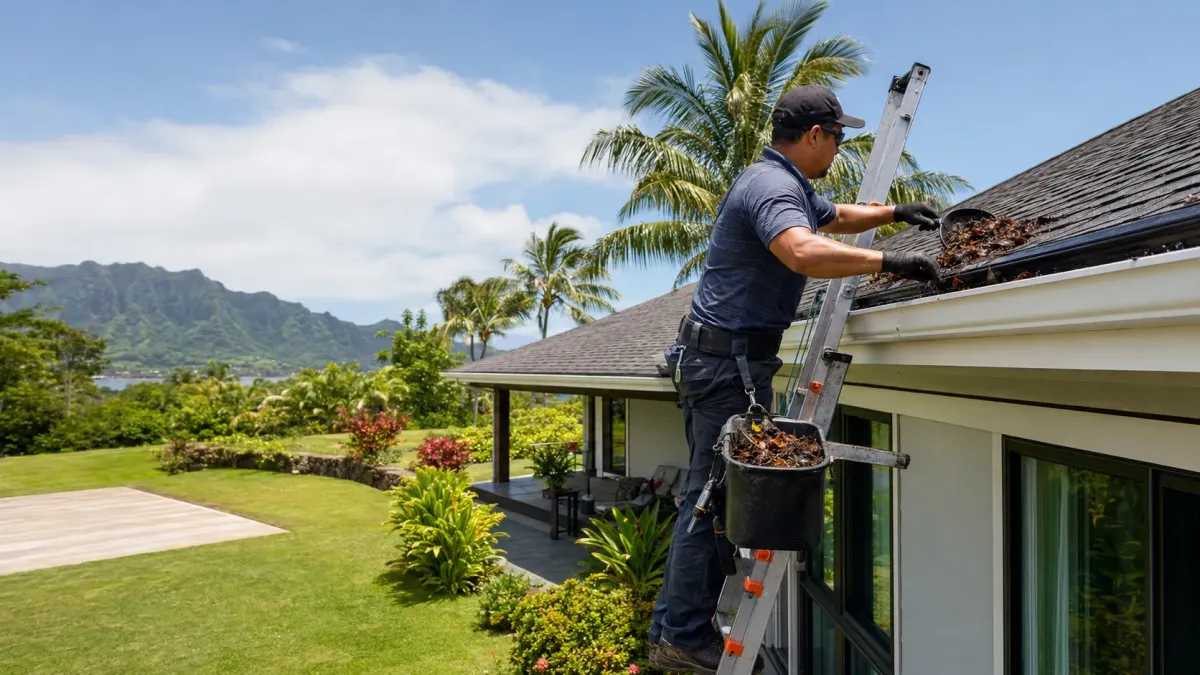
Targeted repair of sagging sections, open seams and fasteners that have pulled loose.
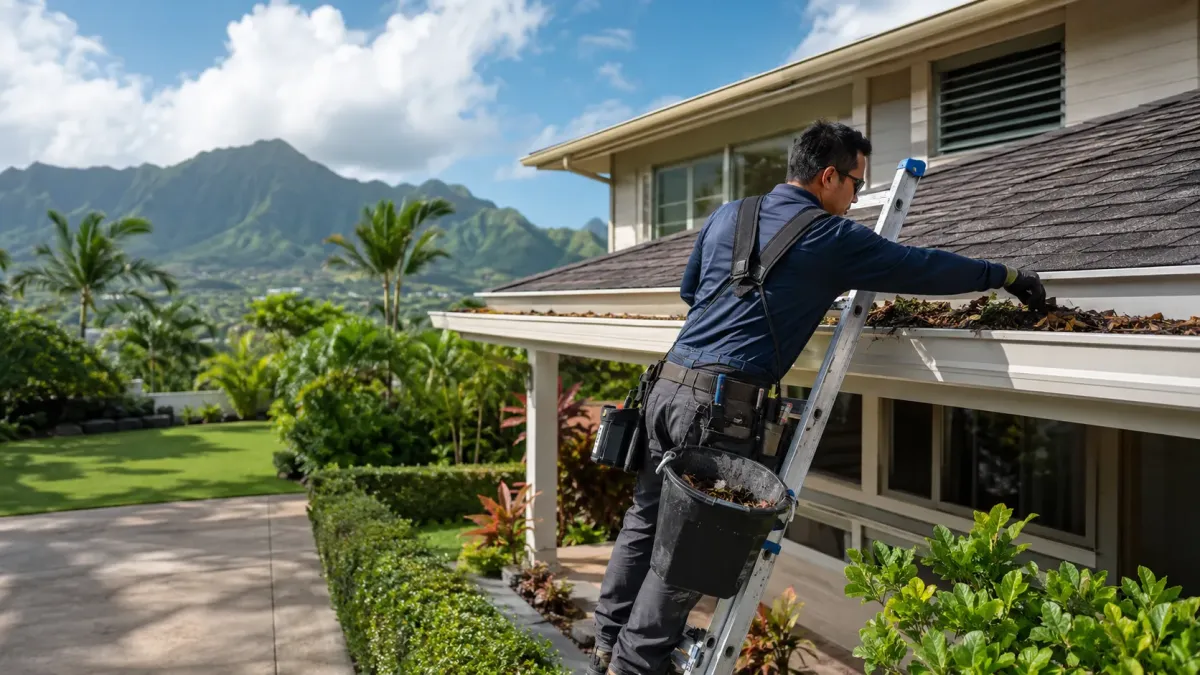
Screens and covers sized to the debris actually falling on your roofline.
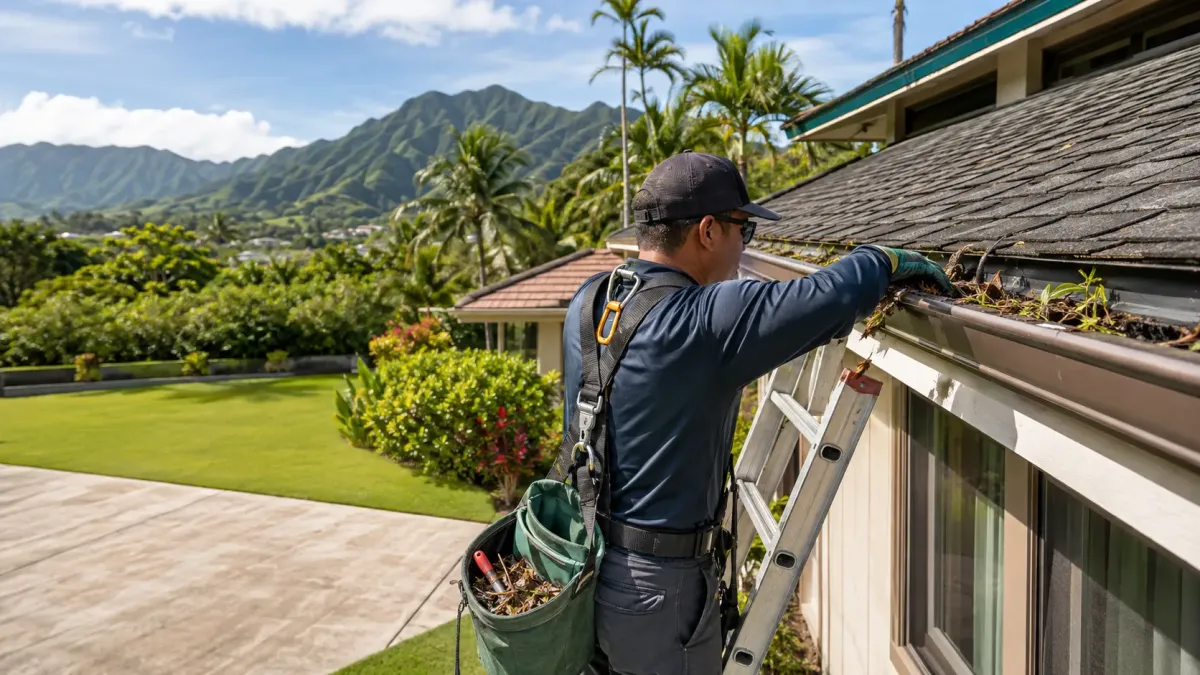
Removal of a failed run and installation of a correctly pitched and sized replacement.
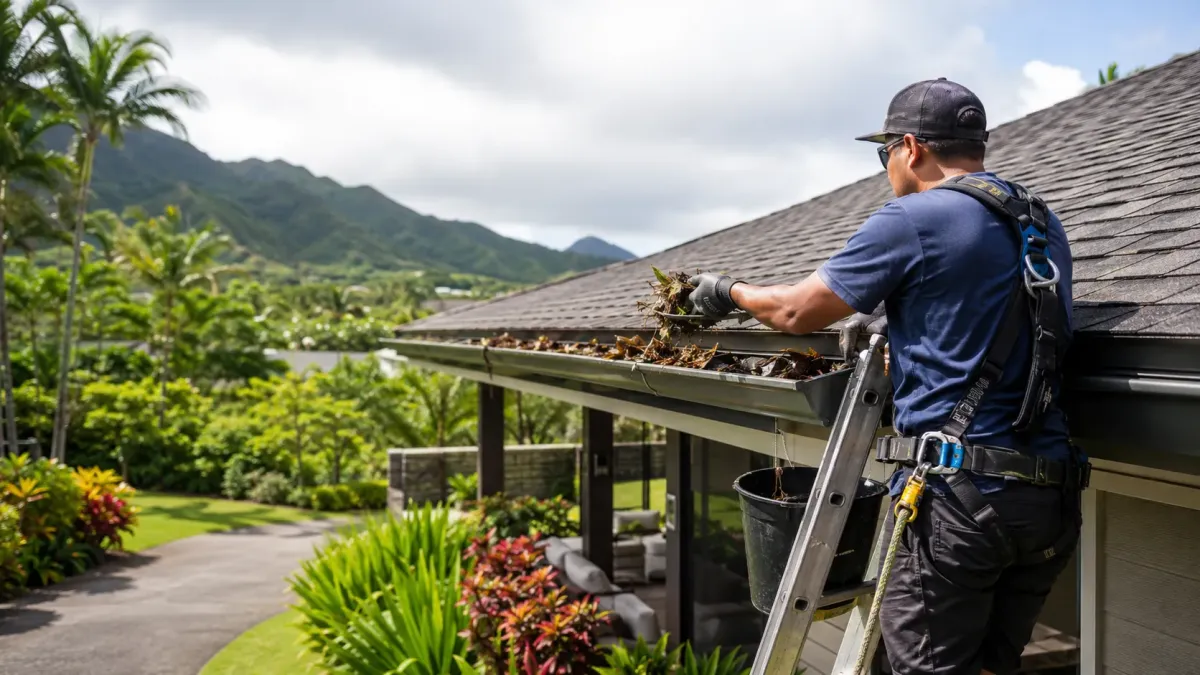
Clearing, repair and correct sizing of the drops that carry the roof's water away.
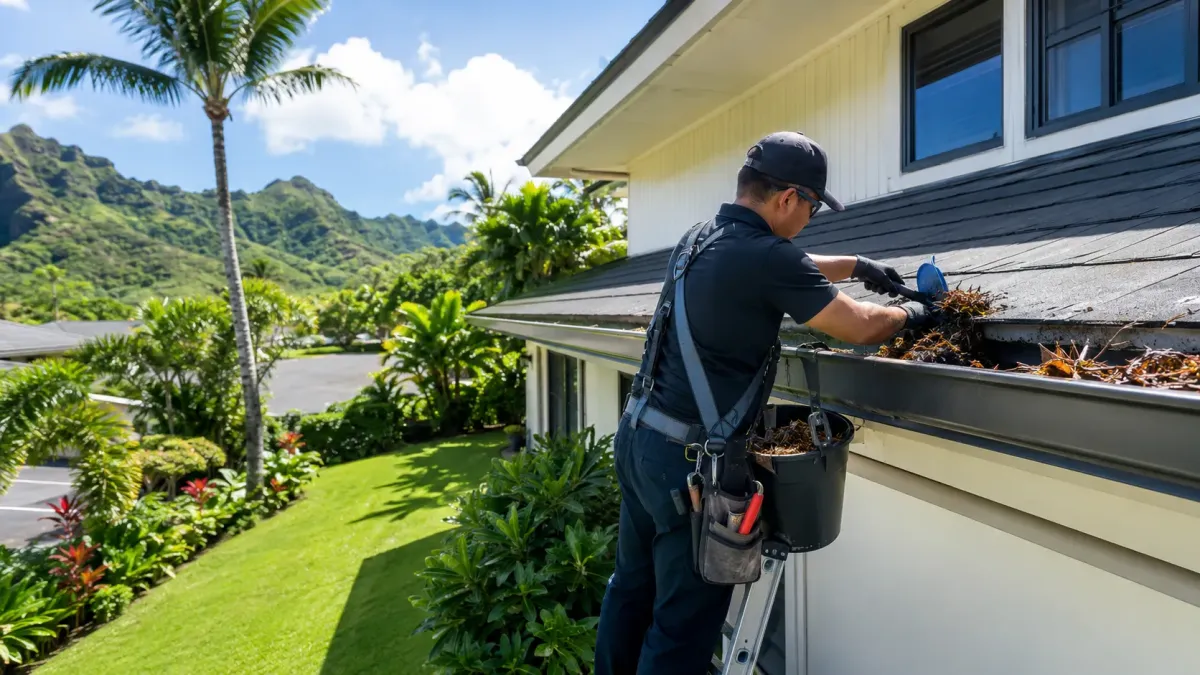
A documented condition check of every run, drop and fascia line on the roof.
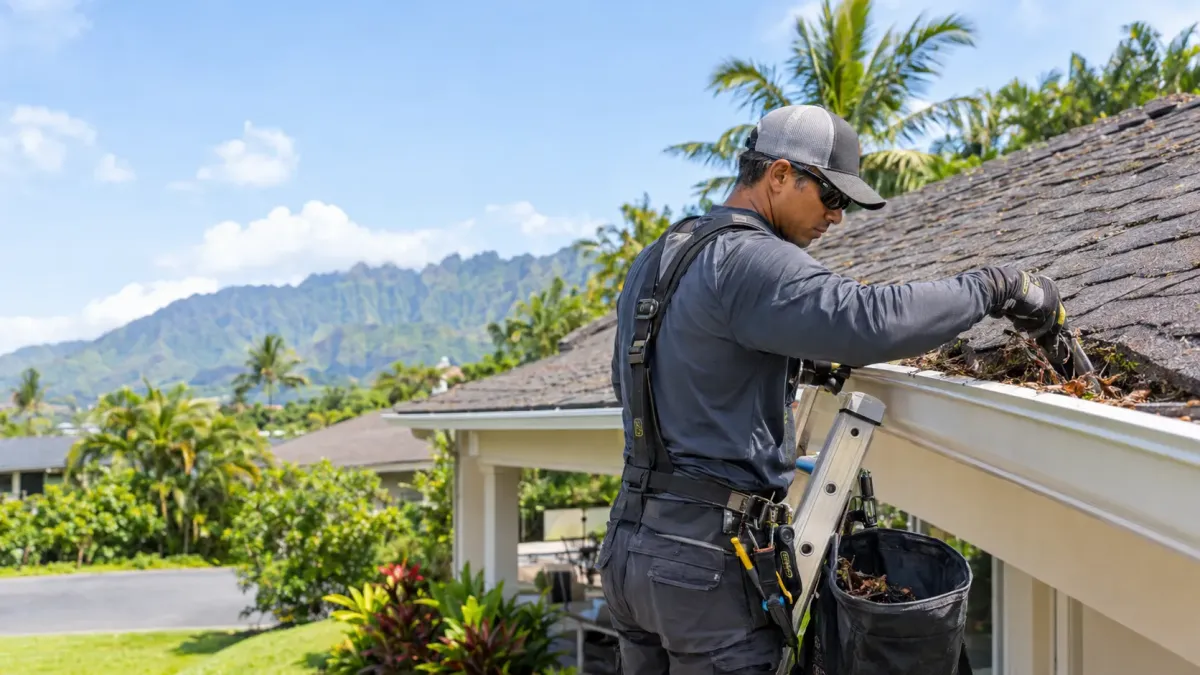
Scheduled gutter service for multi-building properties, with documented completion per building.
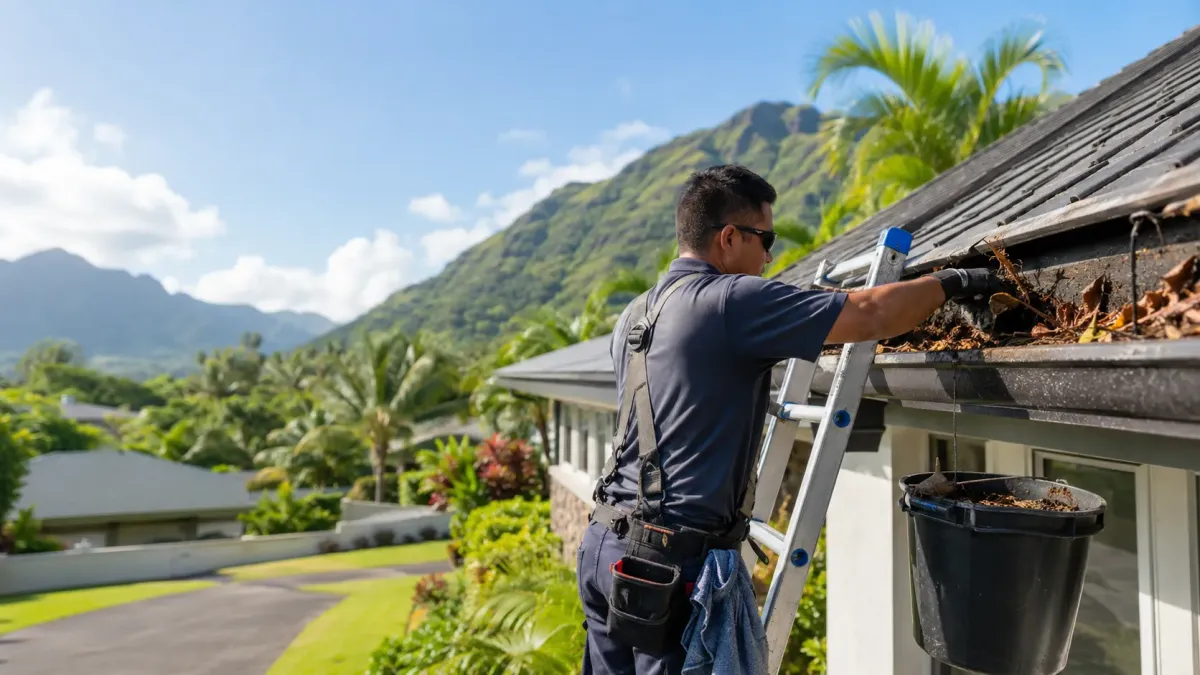
Repair of the fascia and soffit that overflowing gutters have soaked and softened.
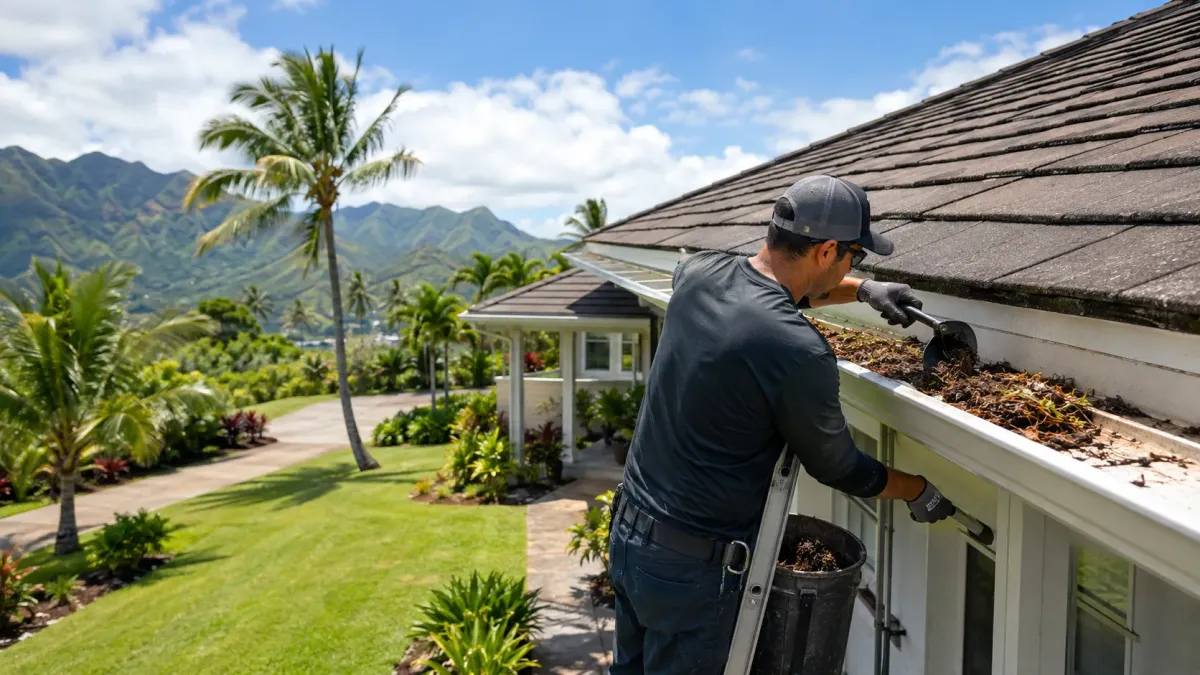
Continuous runs formed to length on site, with joints only where the roofline turns.
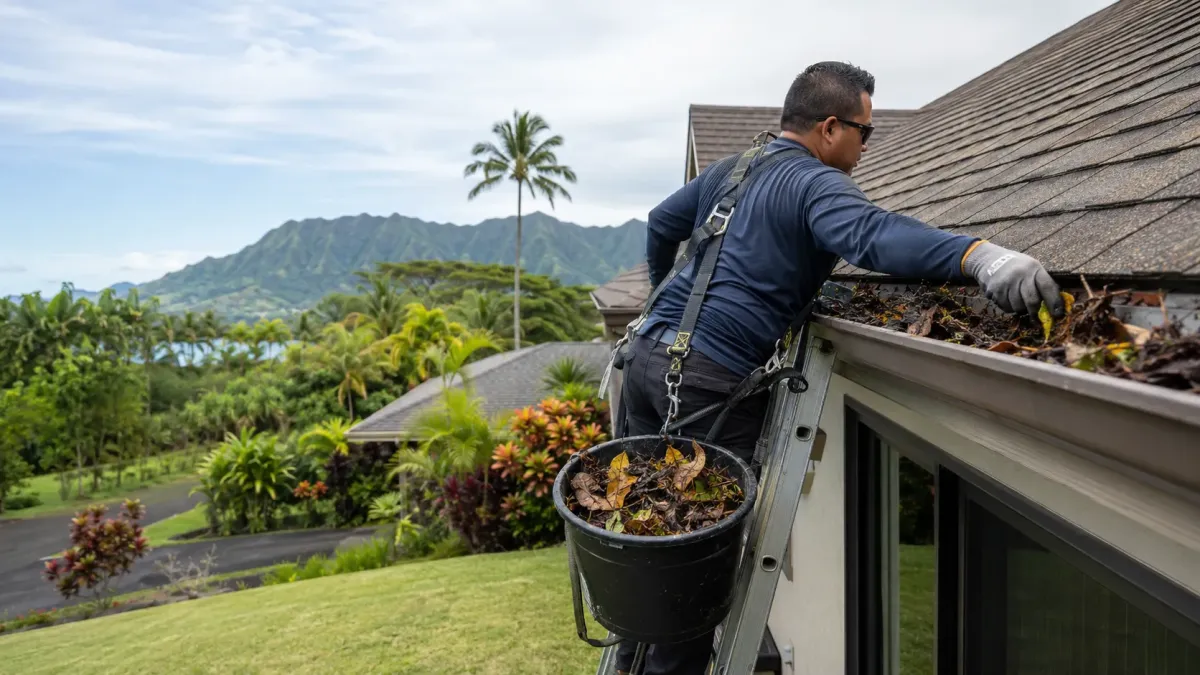
New runs installed where a roofline has none, sized to the water it sheds.
Frequently Asked Questions
Gutter Cleaning can be complex, and we’re here to provide answers to common questions. Here are some frequently asked questions from our clients.
Frequently Asked Questions about gutter cleaning kaneohe hawaii
How often should you clean gutters in Hawaii?
More often than the twice-a-year rule you will read on mainland sites. Nothing overhead here drops its leaves in one go and then stops, so debris arrives in every month of the year. Most Kaneohe homes under real canopy need three to four visits a year, and homes with an open roofline and little tree cover can often hold at two.
Why do gutters clog so fast in Kaneohe?
Two things stack up. The canopy is evergreen and constantly shedding seed pods, flower drop and fronds, and the Koolau Mountains pull rain down onto Kaneohe rooflines on days when the leeward side stays dry. Debris keeps arriving and rain keeps packing it tighter into the low end of the run.
What is the best month to get your gutters cleaned?
October is the month that matters most here, because it puts the system clear before the wet stretch that runs through winter. A second visit around March clears whatever the storms drove in. If you only ever book once, book it before winter rather than after.
How much should you expect to pay for gutter cleaning?
There is no single number, and any figure quoted before someone has seen the roof is a starting point rather than a price. Cost follows the length of the run, how many stories, roof pitch and access, whether the downspouts are packed or just the troughs, and what is overhead. We price after looking at the roofline.
Do I need gutter guards in Hawaii?
Guards help most on homes under heavy canopy, where they cut the number of full clean-outs a year. They do not eliminate service, and on the windward side that matters more than usual, because fine organic grit still washes through the mesh and settles in the run. Think of a guard as reducing visits, not ending them.
What causes black streaks on gutters?
That staining is usually a mix of asphalt shingle runoff and the mildew that grows readily in this humidity, drawn down the face of the gutter by water spilling over the front edge. It is a sign the trough is overflowing rather than draining. Clearing the run and correcting the pitch usually stops new streaking, and the existing stain can be washed off separately.
Still Have Questions About gutter cleaning kaneohe hawaii?
Speak With a Trusted Gutter Cleaning Expert Today.
What Our Satisfied Clients Have to Say About
We pride ourselves on delivering great results and experiences for each client. Hear directly from home and business owners who’ve trusted us with their Gutter Cleaning needs.
The Trusted Gutter Cleaning Expert Near You
Ready to hear more about expert services at ?
Contact us today to receive a detailed, no-obligation quote.


