
Commercial Gutter Cleaning in Kaneohe
Condo Associations, Property Managers and Small Commercial
Windward Oahu carries a lot of managed residential property, and the gutter work on it is routinely deferred because nobody owns the decision. Condo associations along the Kaneohe Bay side, including large complexes such as Puu Alii and Poha Kea Point, run dozens of buildings under the same canopy and the same rainfall as every single-family home around them, with the same consequences when the runs pack up. The difference is that a board needs a defensible record of what was done and when, not just an invoice. That is what commercial service here is built around. We scope the property as a whole, sequence the buildings so the work happens in one mobilisation rather than in scattered visits, and hand back a per-building record of what was cleared, what flow-tested clean, and what needs attention before the next wet season. Small commercial buildings along the Kamehameha Highway corridor get the same approach at a smaller scale. The other practical issue is access. Longer runs, larger drops and taller elevations need the right equipment on site the first time, which is why we walk the property before quoting rather than pricing it off a unit count.
Work is scoped from a walk-through and quoted per property, with the building sequence agreed in advance so residents get notice. Completion records are issued per building, covering what was cleared, the flow result at each drop, and any run that needs repair before the next wet stretch. Boards and managers can put those records straight in front of owners without having to translate anything, and they build into a maintenance history that makes the following year's budgeting a great deal easier to defend.

What's Included in our Commercial Gutter Cleaning service?
Multi-Building Scheduling
Whole properties sequenced in one mobilisation rather than building by building.
Documented Completion
Per-building records boards and managers can put in front of owners.
Commercial Gutters Service
Longer runs and larger drops handled with the access equipment they need.
Proudly serving Kaneohe, Kailua, Kahaluu, Waimanalo, Ahuimanu and Heeia for years.
Comprehensive Gutter Cleaning Services in Kaneohe
Tailored to Your Needs
Ten services, from routine clean-outs to full replacement runs. Most Kaneohe calls start with cleaning and turn up something else once the debris is out, which is why repair, fascia work and guard installation sit alongside it rather than in a separate department.
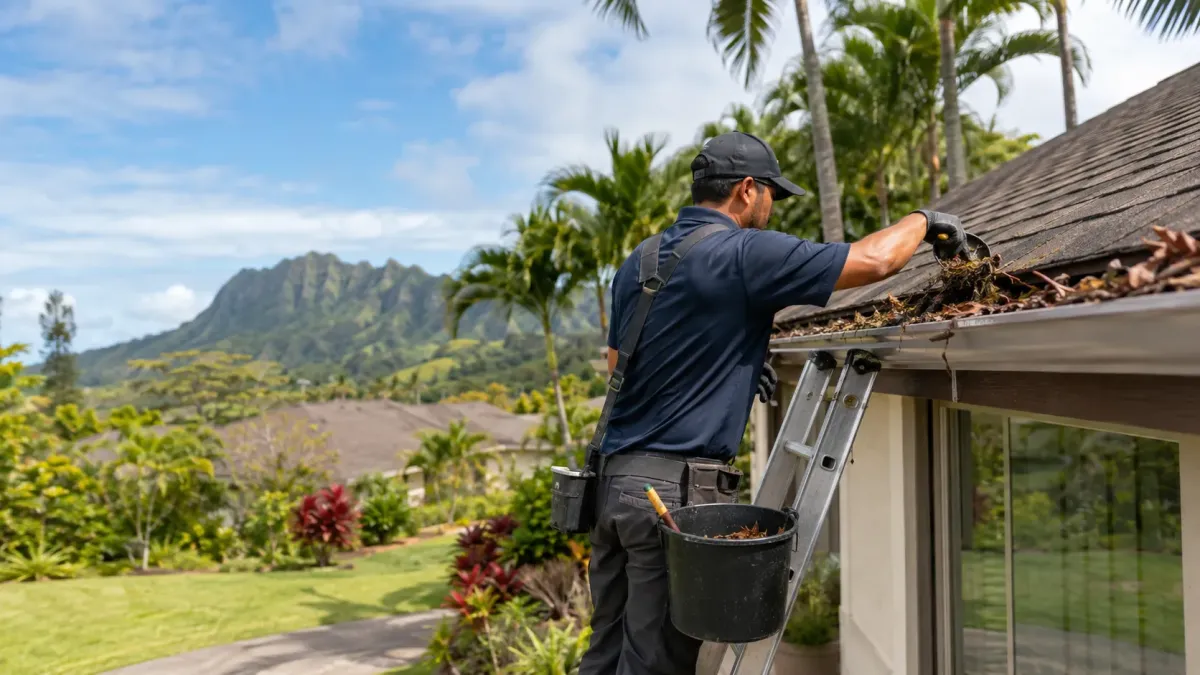
A full clear-out of troughs and downspouts, followed by a flow test on every drop.
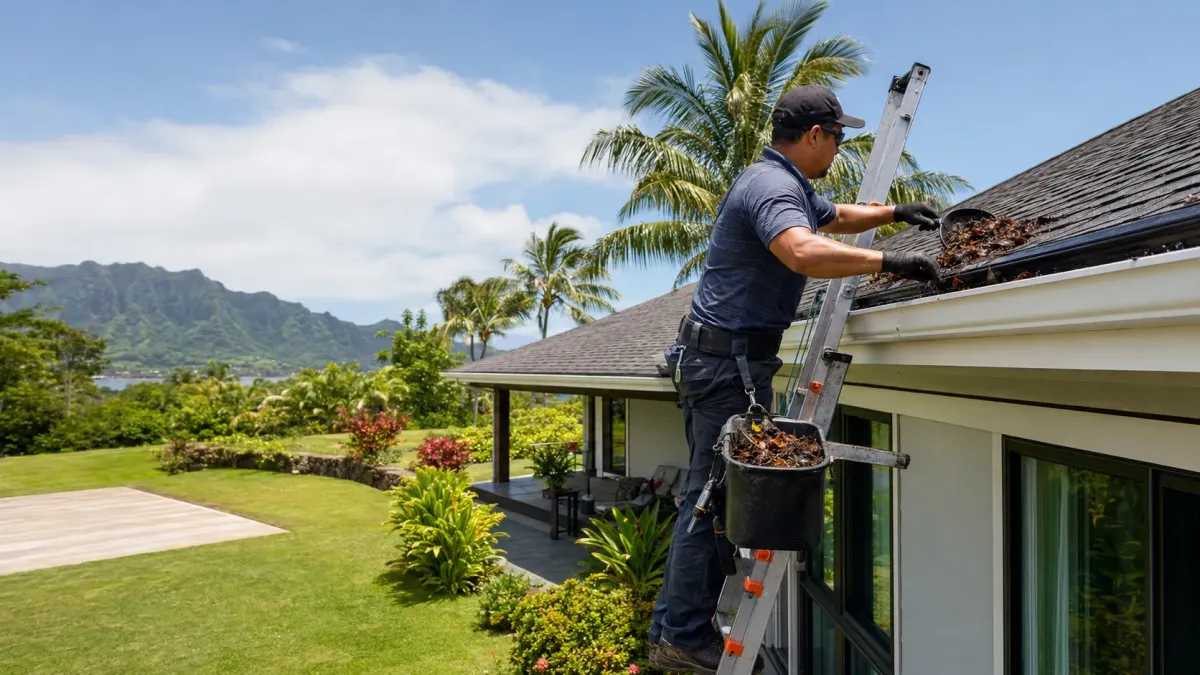
Targeted repair of sagging sections, open seams and fasteners that have pulled loose.
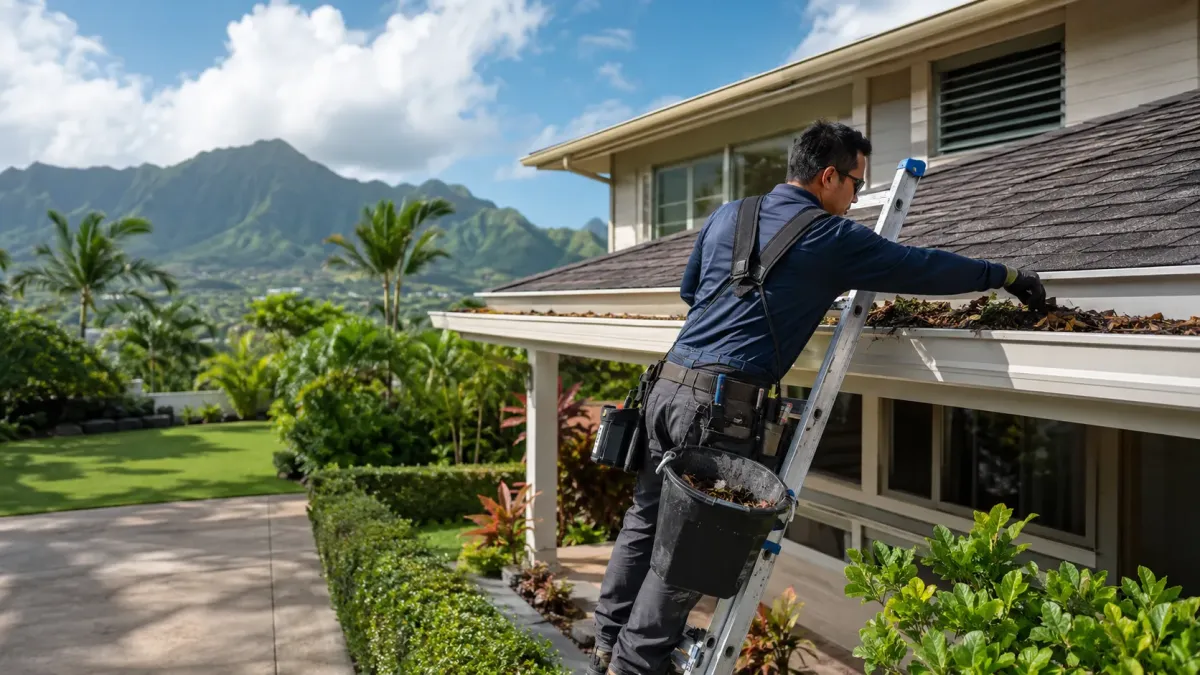
Screens and covers sized to the debris actually falling on your roofline.
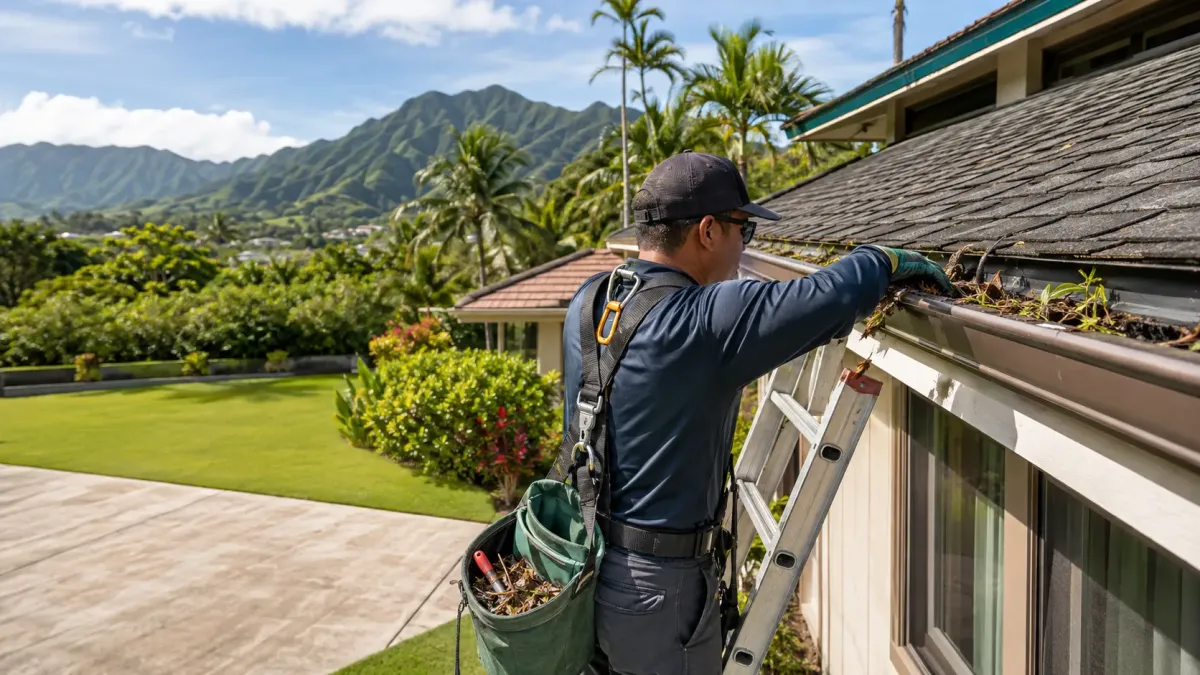
Removal of a failed run and installation of a correctly pitched and sized replacement.
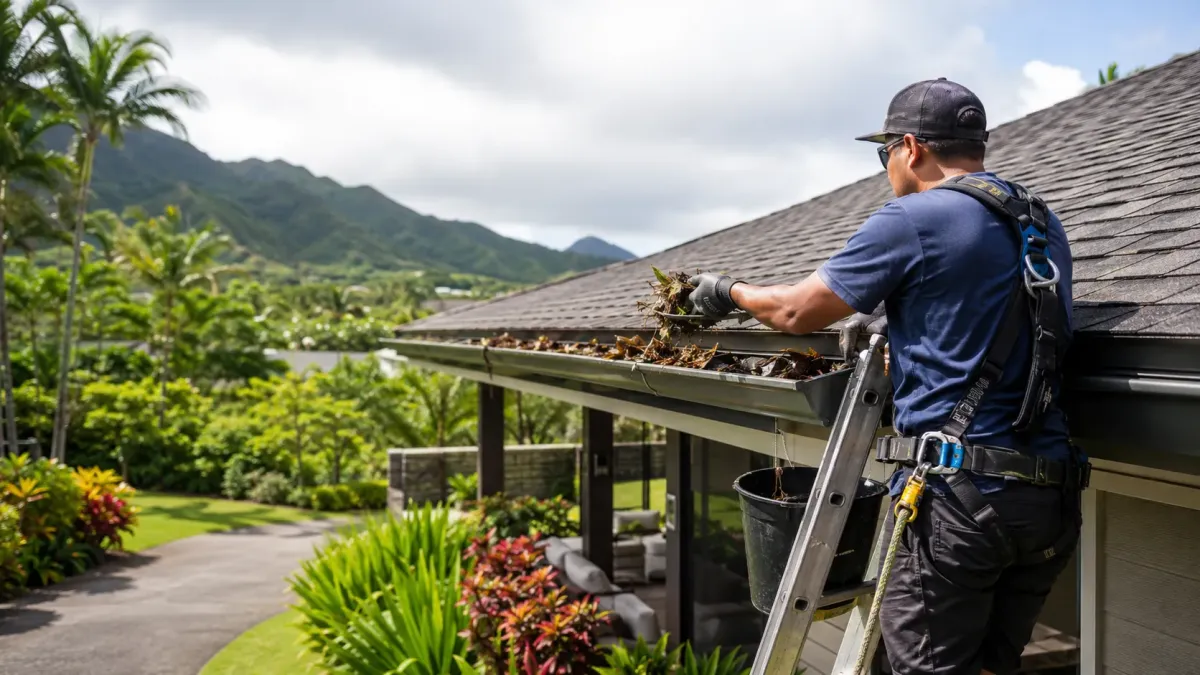
Clearing, repair and correct sizing of the drops that carry the roof's water away.
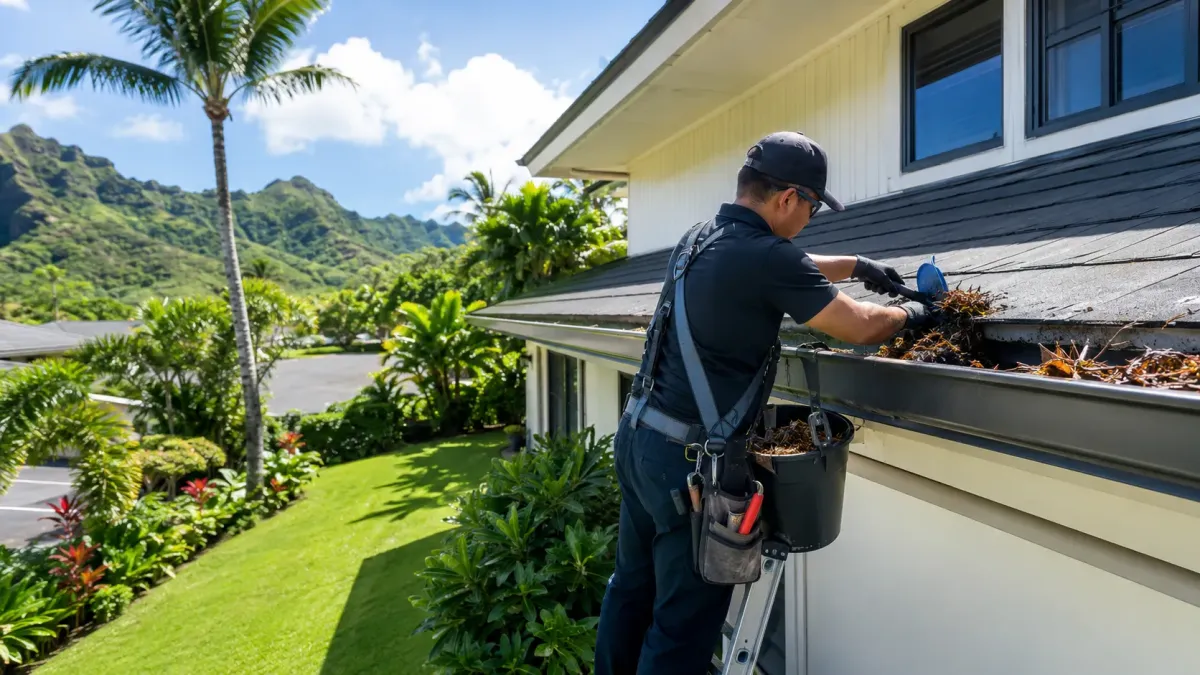
A documented condition check of every run, drop and fascia line on the roof.
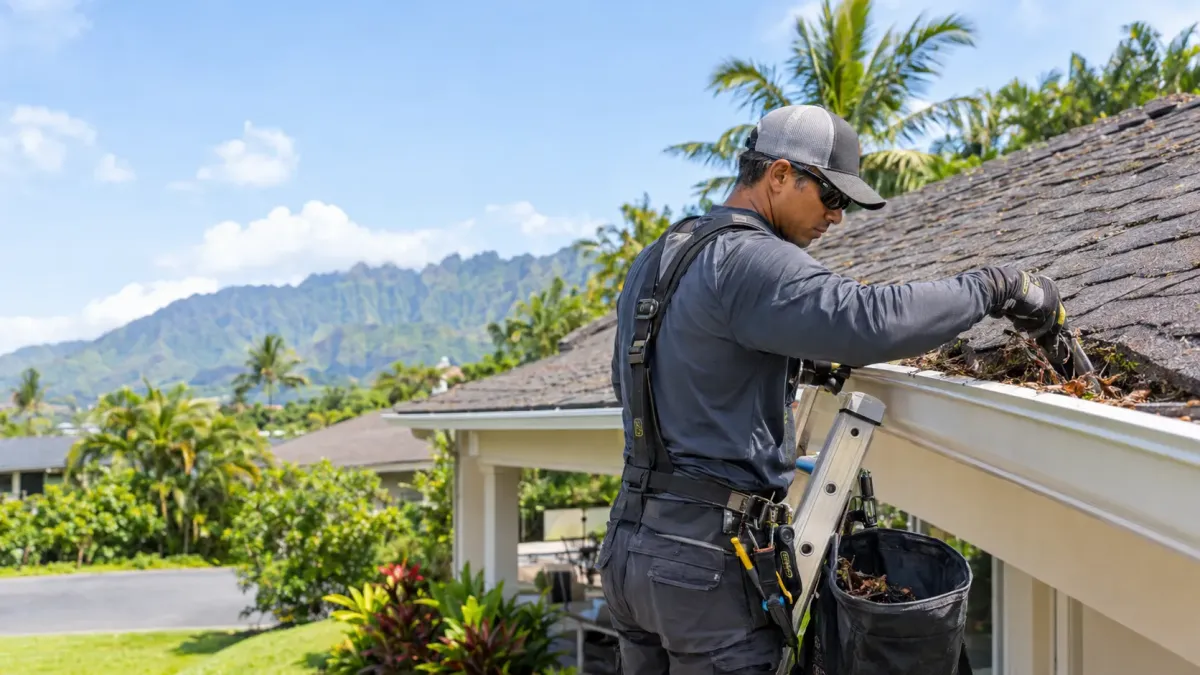
Scheduled gutter service for multi-building properties, with documented completion per building.
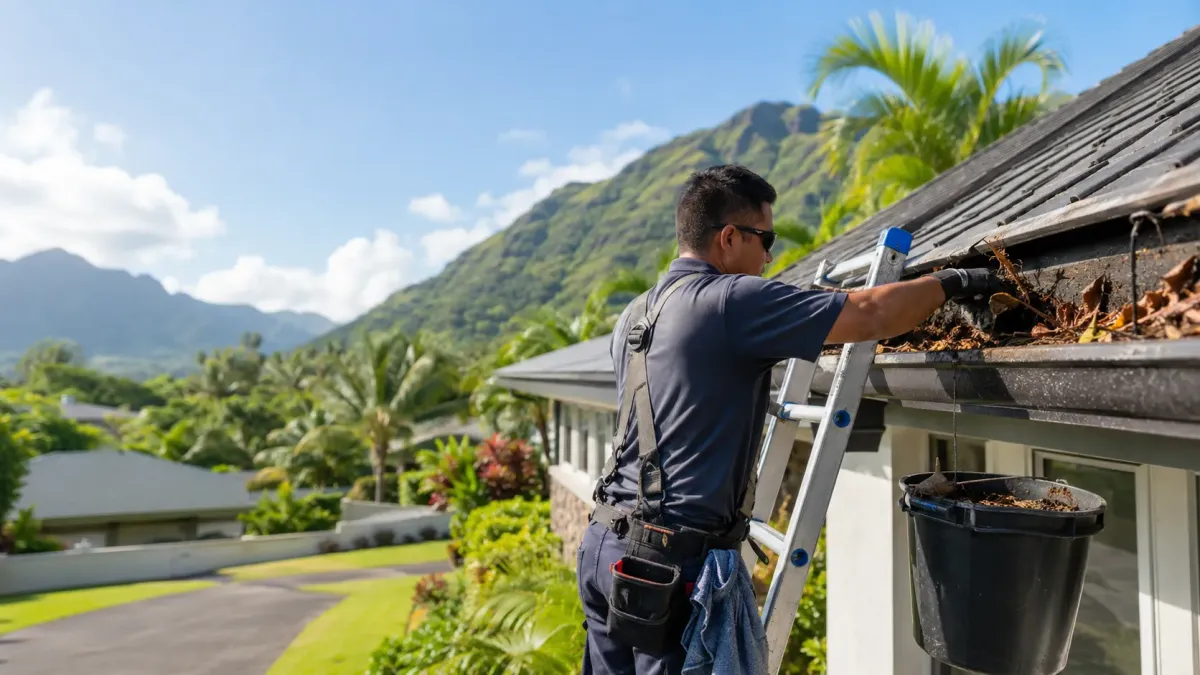
Repair of the fascia and soffit that overflowing gutters have soaked and softened.
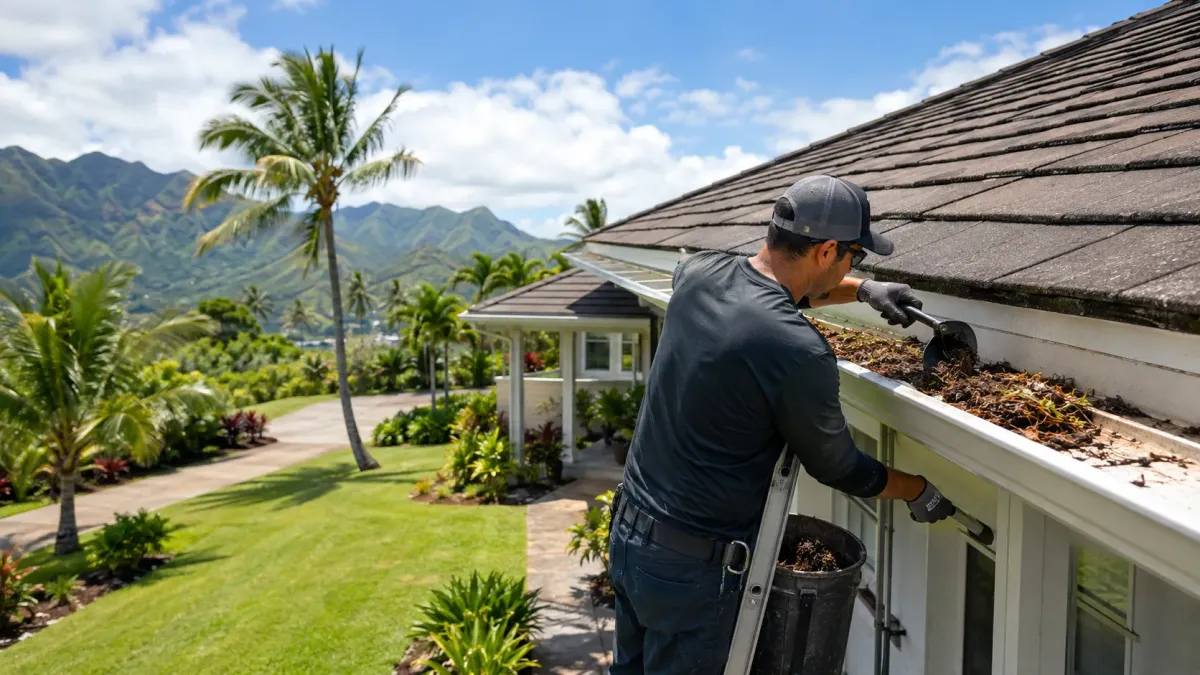
Continuous runs formed to length on site, with joints only where the roofline turns.
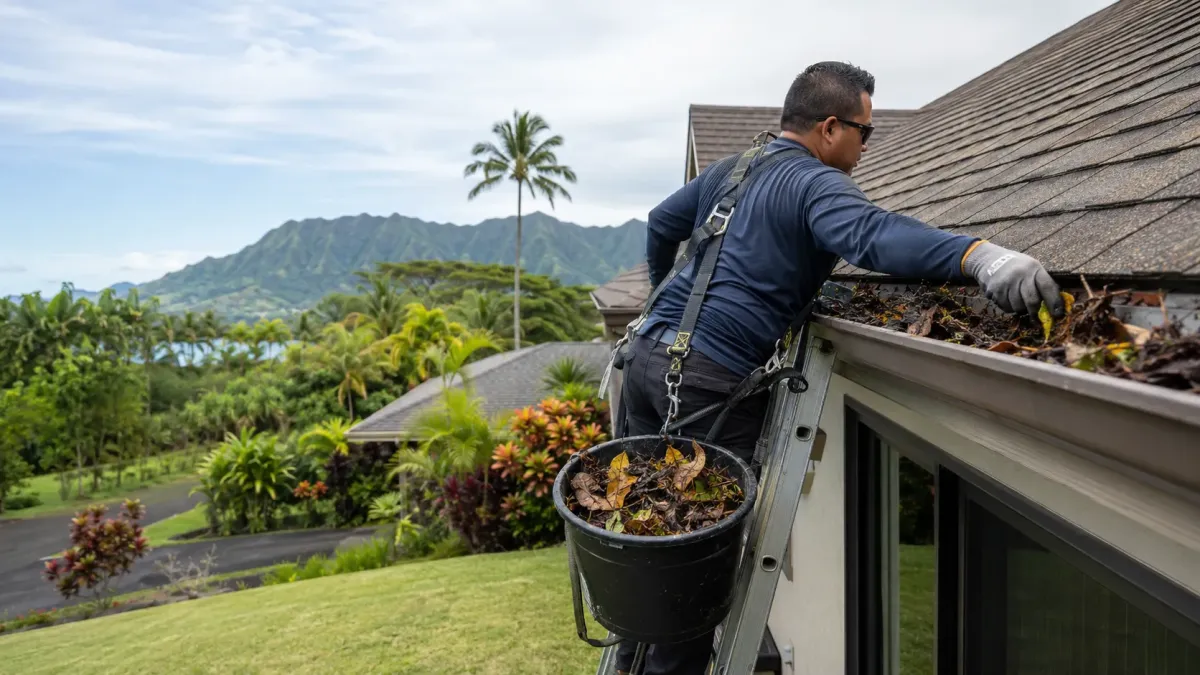
New runs installed where a roofline has none, sized to the water it sheds.
Communities We Serve on the Windward Coast
Gutter work built for the windward side of Oahu.
Our service area runs the windward coast from Waimanalo up through Kailua, Kaneohe, Heeia, Ahuimanu and Kahaluu. These communities share one county permit authority and one rainfall pattern, but the roofs are not alike, and neither are the debris loads above them.
Frequently Asked Questions
Gutter Cleaning can be complex, and we’re here to provide answers to common questions. Here are some frequently asked questions from our clients.
Frequently Asked Questions about gutter cleaning kaneohe hawaii
How often should you clean gutters in Hawaii?
More often than the twice-a-year rule you will read on mainland sites. Nothing overhead here drops its leaves in one go and then stops, so debris arrives in every month of the year. Most Kaneohe homes under real canopy need three to four visits a year, and homes with an open roofline and little tree cover can often hold at two.
Why do gutters clog so fast in Kaneohe?
Two things stack up. The canopy is evergreen and constantly shedding seed pods, flower drop and fronds, and the Koolau Mountains pull rain down onto Kaneohe rooflines on days when the leeward side stays dry. Debris keeps arriving and rain keeps packing it tighter into the low end of the run.
What is the best month to get your gutters cleaned?
October is the month that matters most here, because it puts the system clear before the wet stretch that runs through winter. A second visit around March clears whatever the storms drove in. If you only ever book once, book it before winter rather than after.
How much should you expect to pay for gutter cleaning?
There is no single number, and any figure quoted before someone has seen the roof is a starting point rather than a price. Cost follows the length of the run, how many stories, roof pitch and access, whether the downspouts are packed or just the troughs, and what is overhead. We price after looking at the roofline.
Do I need gutter guards in Hawaii?
Guards help most on homes under heavy canopy, where they cut the number of full clean-outs a year. They do not eliminate service, and on the windward side that matters more than usual, because fine organic grit still washes through the mesh and settles in the run. Think of a guard as reducing visits, not ending them.
What causes black streaks on gutters?
That staining is usually a mix of asphalt shingle runoff and the mildew that grows readily in this humidity, drawn down the face of the gutter by water spilling over the front edge. It is a sign the trough is overflowing rather than draining. Clearing the run and correcting the pitch usually stops new streaking, and the existing stain can be washed off separately.
Frequently Asked Questions about Commercial Gutter Cleaning
Do you work with condo associations and property managers?
Yes, and the reporting is built for it. Boards need per-building documentation of what was done rather than a single line-item invoice, so that is what gets issued. Scheduling is agreed in advance so residents can be given notice.
How is commercial gutter cleaning priced?
From a property walk rather than a unit count. Linear footage, elevation, access, drop count and the canopy over each building all move the number, and a property with easy ground access prices very differently from one where the runs can only be reached from above.
How often do commercial properties here need service?
The same forces apply as on a house, so the interval is driven by canopy and exposure rather than by property type. Buildings under heavy tree cover need more frequent attention, and the cost of getting it wrong is higher because one blocked run can affect several units.
Can you work around resident parking and access?
That gets planned in the walk-through. We agree the building sequence and the access needs up front so notices can go out, rather than turning up and working around whatever is in the way on the day.
Schedule Commercial Gutter Service
What Our Satisfied Clients Have to Say About
We pride ourselves on delivering great results and experiences for each client. Hear directly from home and business owners who’ve trusted us with their Gutter Cleaning needs.
The Trusted Gutter Cleaning Expert Near You
Ready to hear more about expert services at ?
Contact us today to receive a detailed, no-obligation quote.


