
Gutter Cleaning in Waimanalo, HI
Gutter Cleaning for Waimanalo Homes
Waimanalo sits at the far end of our service area and is the least like the rest of it. The town of roughly six thousand people is strung along Kalanianaole Highway, which is effectively the only way in or out, and it is separated from its own shoreline by Bellows Air Force Station. Inland, the lots get large and agricultural, running back toward the Koolau with working nurseries and small farms on them. That agricultural character is the single biggest factor in gutter work here. Nursery country means a great deal of airborne organic material and a lot of green waste in motion, and it lands on rooflines that are frequently long, low and single-story. Closer to the beach lots the problem inverts: less debris, more wind-driven sand and salt working on the metal and the fasteners. A crew treating the valley and the beach side as the same job will get one of them wrong.
Nursery Country, Agricultural Lots and Sand
Land tenure is worth understanding before work starts. Significant acreage here sits under the Department of Hawaiian Home Lands rather than in ordinary fee simple, and other parcels are held under state agricultural leases. That does not change how a gutter gets cleaned, but it can change who has to authorise anything structural, and it is the kind of detail an off-island contractor discovers halfway through. Beyond that, the geography is straightforward to work with: Mount Olomana on the skyline, the Waimanalo Polo Field and the nurseries inland, the small commercial stretch near the Waimanalo Shopping Center, and Sea Life Park down toward Makapuu at the southern end, with Bellows Field Beach Park occupying the coast in between.

Gutter Repair in Waimanalo
Cleaning intervals here split along the same line the town does. Inland toward the nurseries and the agricultural lots running back toward the Koolau, the organic load is high and continuous, and rooflines need clearing more often than most homeowners expect for a place that does not feel heavily wooded. The material is finer than the seed pods and fronds we pull off canopy properties further up the coast, which means it packs tighter and moves further into the downspout before it stops. Out on the beach lots makai of Kalanianaole Highway the volume drops sharply and the visit becomes an inspection as much as a clear-out, with the fasteners and the trough metal getting more attention than the debris. Every drop is flow-tested either way. Nursery neighbours matter here too, since a lot downwind of one collects more than its own trees ever drop.
Gutter Guards on Agricultural Lots
Repair work near the shoreline is dominated by corrosion rather than by weight. Wind-driven salt and sand off Waimanalo Beach get into the seams and work on the fasteners continuously, and on the exposed stretch behind Bellows Air Force Station a run can be structurally fine while the fixings holding it have quietly failed. Inland along Kalanianaole Highway and back into the valley, the pattern reverts to the one we see across the coast: heavy debris load, sagging mid-span, softened fascia behind the back edge. We diagnose which of the two situations a house is in before quoting, because refastening a corroded run and rehanging an overloaded one are different jobs with different costs and different expected lives. Where a parcel sits under Hawaiian Home Lands or a state agricultural lease, we confirm who signs off on structural work before scheduling it.

From the Beach Lots to the Valley
Guards are a genuinely mixed recommendation in Waimanalo, and we will not pretend otherwise. On the agricultural lots inland toward the Koolau, the incoming material is fine enough that a good deal of it passes straight through standard mesh, so a guard removes less of the problem than it would under heavy canopy elsewhere on the coast. It still helps where there are mature trees on the lot, which is common enough on the older parcels near the Waimanalo Shopping Center. On the beach side, where debris volume is low to begin with, guards rarely pay for themselves and the money is usually better spent on material choice and fastener quality at the next replacement. We will tell you which of those your property is. On leasehold parcels we also check that any fixed installation is something the lease terms actually allow.
Gutter work built for the windward side of Oahu.
Proudly serving Kaneohe, Kailua, Kahaluu, Waimanalo, Ahuimanu and Heeia for years.
Comprehensive Gutter Cleaning Services in Kaneohe
Tailored to Your Needs
Ten services, from routine clean-outs to full replacement runs. Most Kaneohe calls start with cleaning and turn up something else once the debris is out, which is why repair, fascia work and guard installation sit alongside it rather than in a separate department.
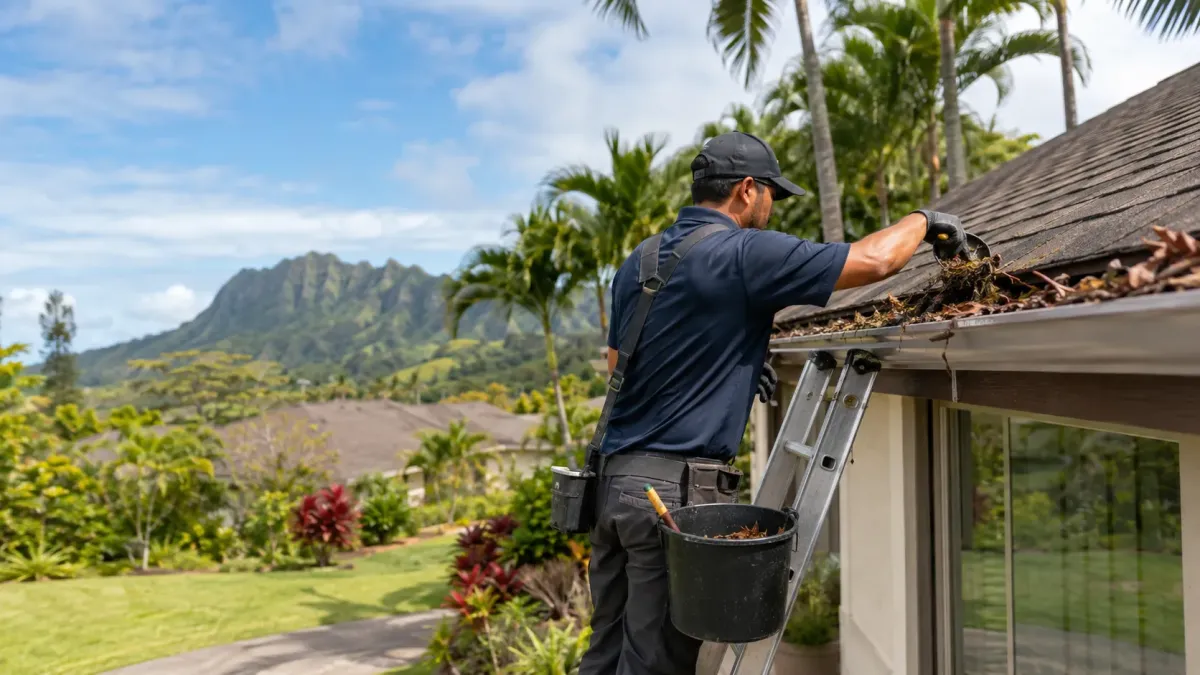
A full clear-out of troughs and downspouts, followed by a flow test on every drop.
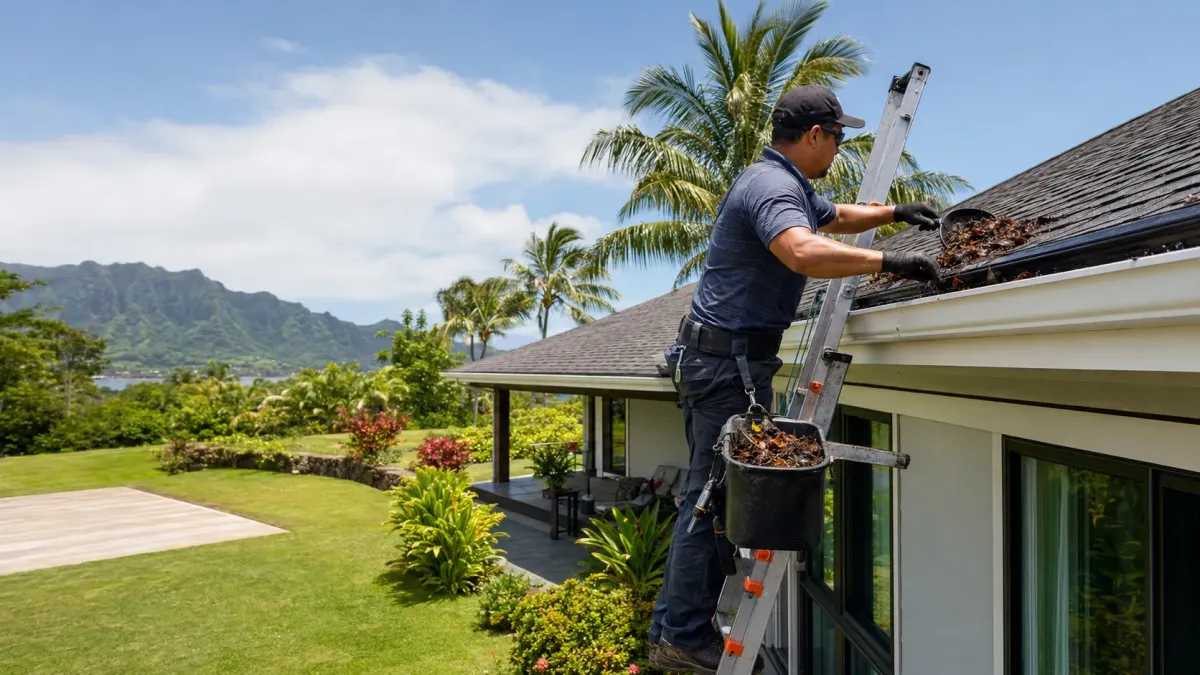
Targeted repair of sagging sections, open seams and fasteners that have pulled loose.
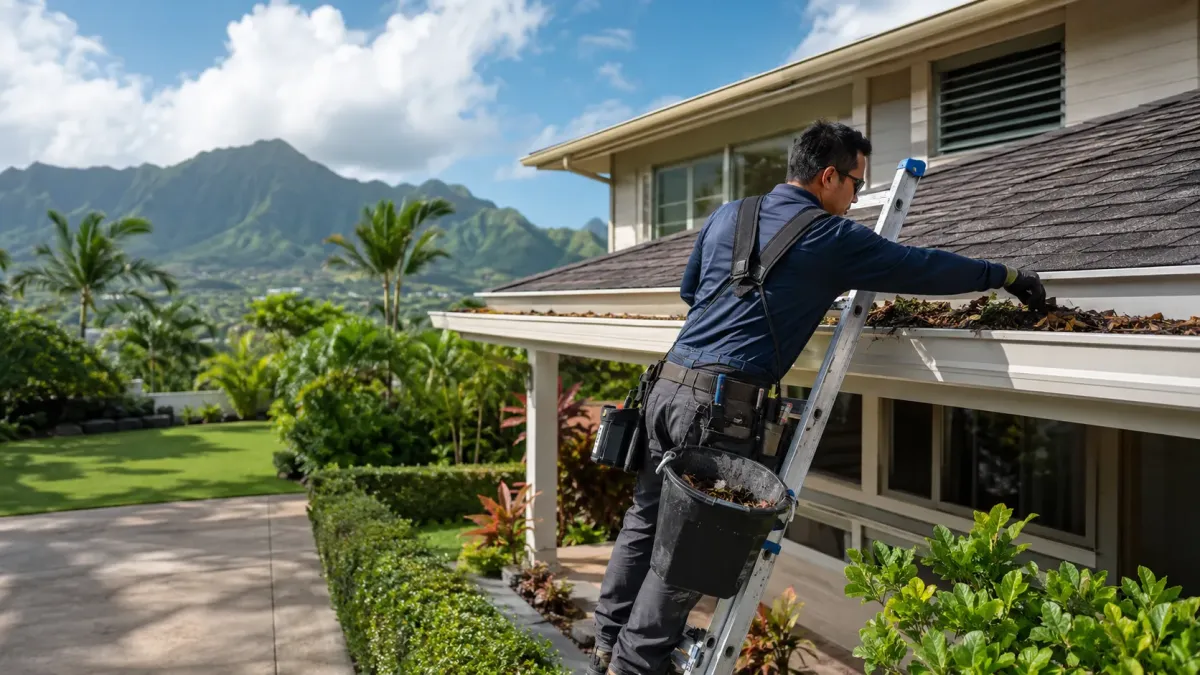
Screens and covers sized to the debris actually falling on your roofline.
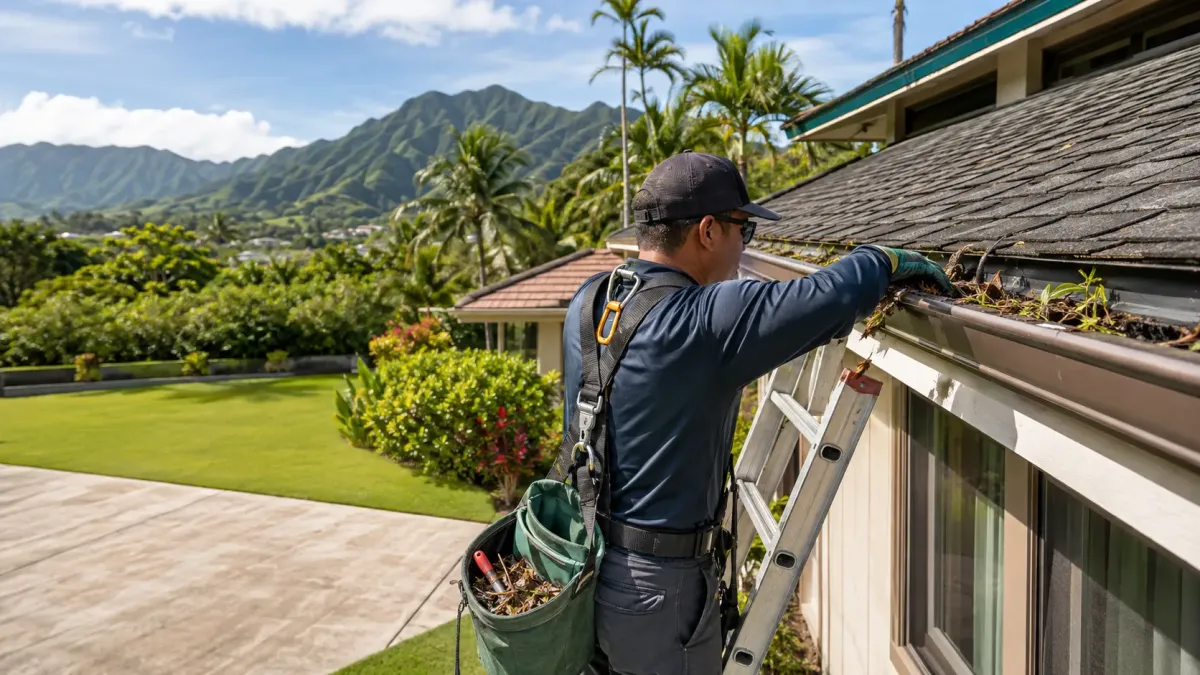
Removal of a failed run and installation of a correctly pitched and sized replacement.
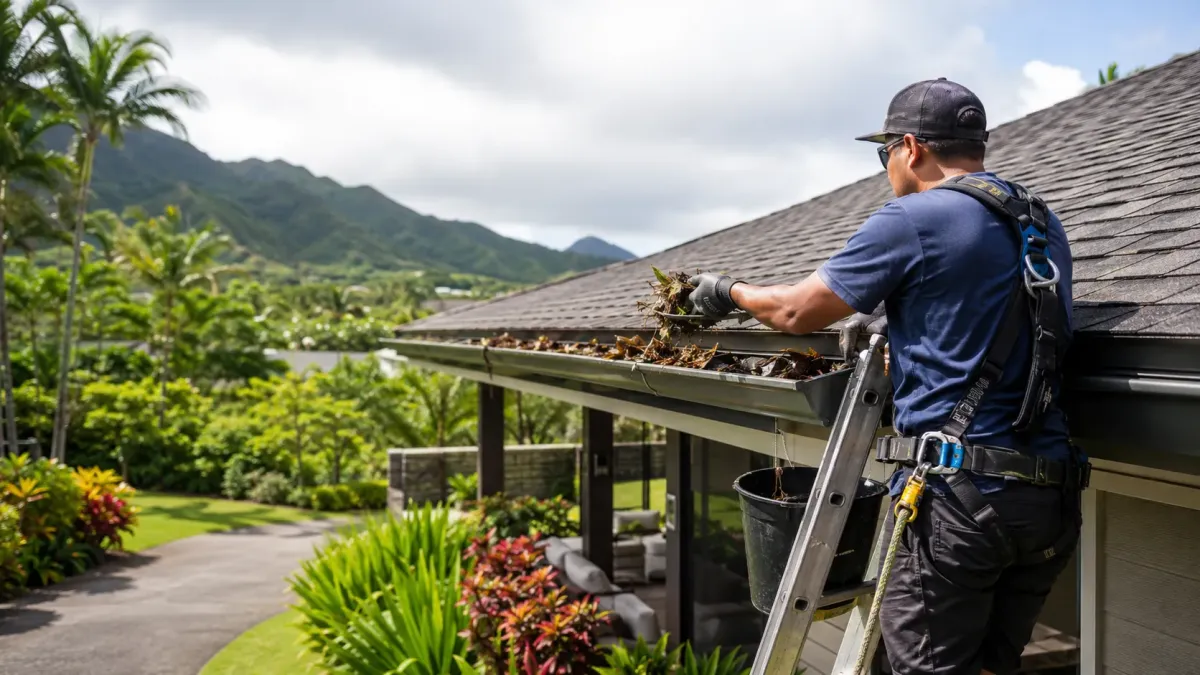
Clearing, repair and correct sizing of the drops that carry the roof's water away.
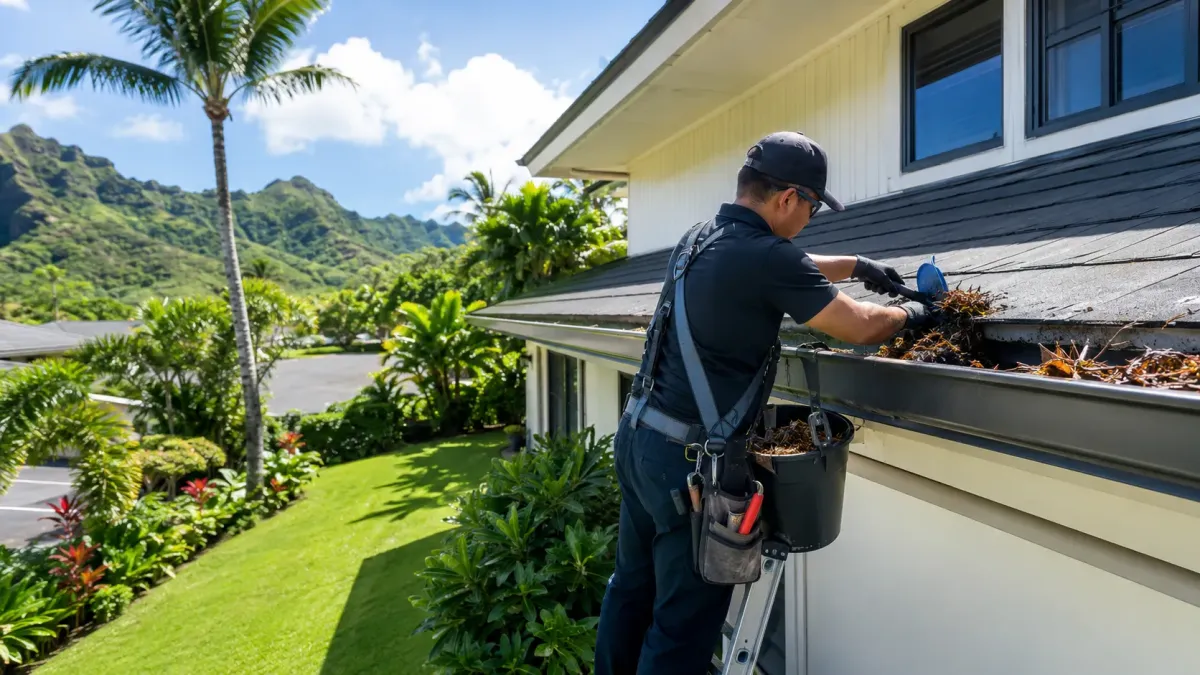
A documented condition check of every run, drop and fascia line on the roof.
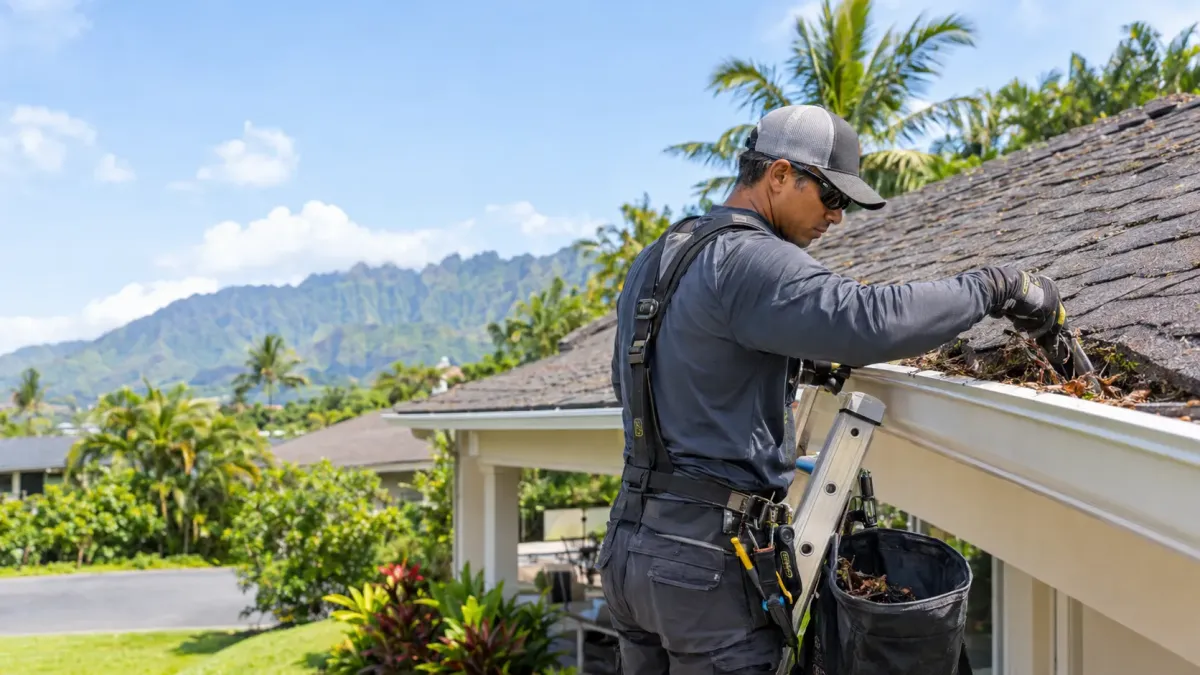
Scheduled gutter service for multi-building properties, with documented completion per building.
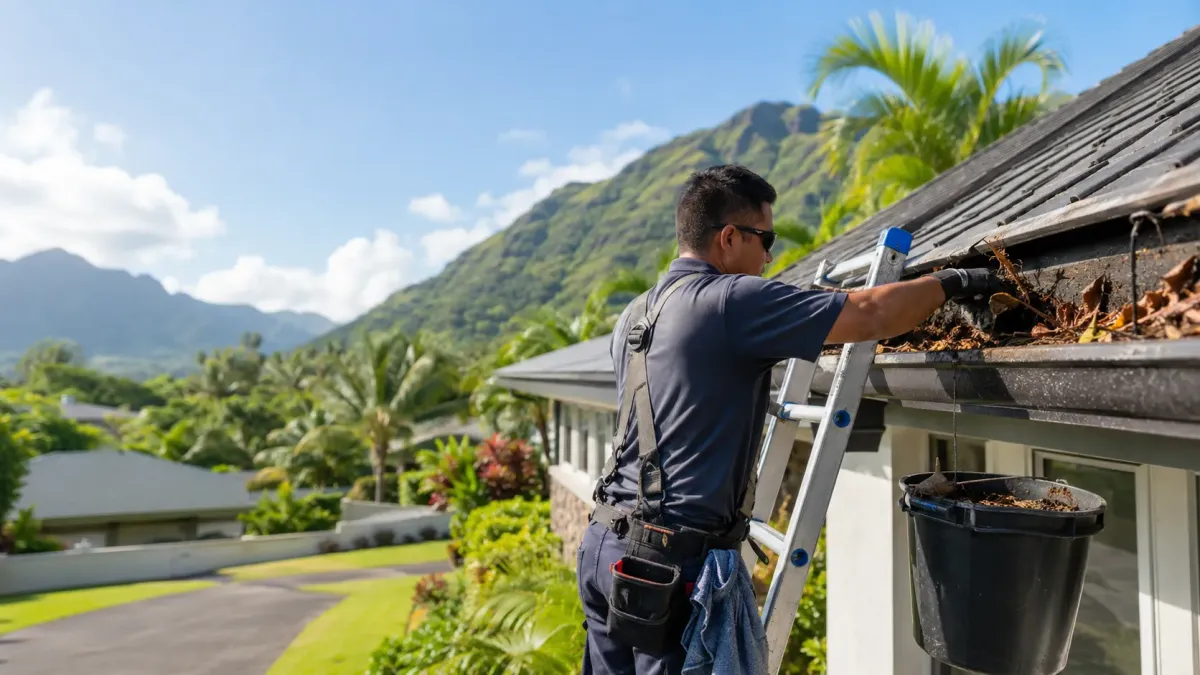
Repair of the fascia and soffit that overflowing gutters have soaked and softened.
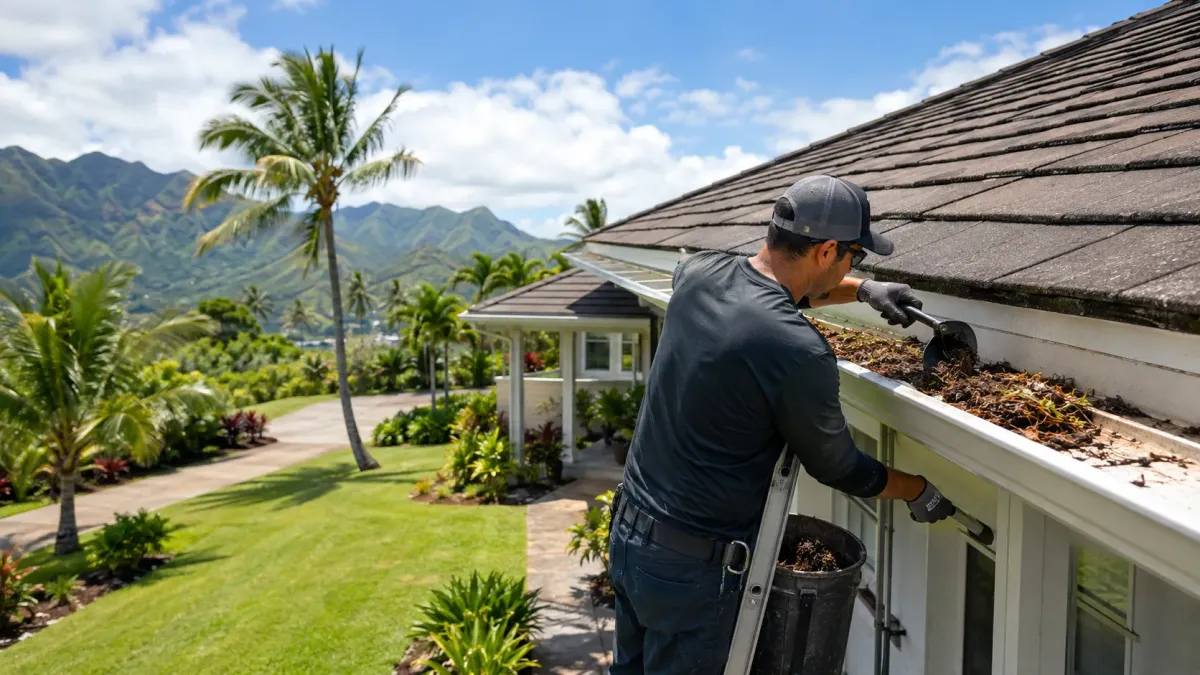
Continuous runs formed to length on site, with joints only where the roofline turns.
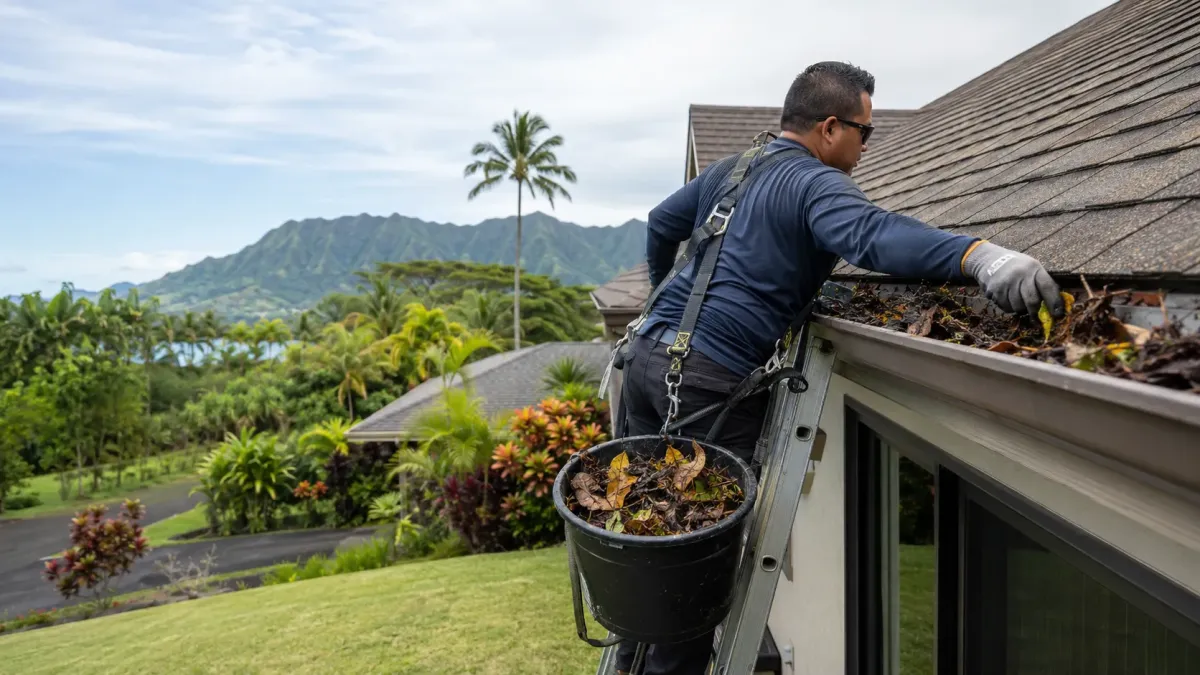
New runs installed where a roofline has none, sized to the water it sheds.
Frequently Asked Questions
Gutter Cleaning can be complex, and we’re here to provide answers to common questions. Here are some frequently asked questions from our clients.
Frequently Asked Questions about gutter cleaning kaneohe hawaii
How often should you clean gutters in Hawaii?
More often than the twice-a-year rule you will read on mainland sites. Nothing overhead here drops its leaves in one go and then stops, so debris arrives in every month of the year. Most Kaneohe homes under real canopy need three to four visits a year, and homes with an open roofline and little tree cover can often hold at two.
Why do gutters clog so fast in Kaneohe?
Two things stack up. The canopy is evergreen and constantly shedding seed pods, flower drop and fronds, and the Koolau Mountains pull rain down onto Kaneohe rooflines on days when the leeward side stays dry. Debris keeps arriving and rain keeps packing it tighter into the low end of the run.
What is the best month to get your gutters cleaned?
October is the month that matters most here, because it puts the system clear before the wet stretch that runs through winter. A second visit around March clears whatever the storms drove in. If you only ever book once, book it before winter rather than after.
How much should you expect to pay for gutter cleaning?
There is no single number, and any figure quoted before someone has seen the roof is a starting point rather than a price. Cost follows the length of the run, how many stories, roof pitch and access, whether the downspouts are packed or just the troughs, and what is overhead. We price after looking at the roofline.
Do I need gutter guards in Hawaii?
Guards help most on homes under heavy canopy, where they cut the number of full clean-outs a year. They do not eliminate service, and on the windward side that matters more than usual, because fine organic grit still washes through the mesh and settles in the run. Think of a guard as reducing visits, not ending them.
What causes black streaks on gutters?
That staining is usually a mix of asphalt shingle runoff and the mildew that grows readily in this humidity, drawn down the face of the gutter by water spilling over the front edge. It is a sign the trough is overflowing rather than draining. Clearing the run and correcting the pitch usually stops new streaking, and the existing stain can be washed off separately.
Still Have Questions About gutter cleaning kaneohe hawaii?
Speak With a Trusted Gutter Cleaning Expert Today.
What Our Satisfied Clients Have to Say About
We pride ourselves on delivering great results and experiences for each client. Hear directly from home and business owners who’ve trusted us with their Gutter Cleaning needs.
The Trusted Gutter Cleaning Expert Near You
Ready to hear more about expert services at ?
Contact us today to receive a detailed, no-obligation quote.


